
How Are RS-485 to Ethernet Converters Used in Environmental Monitoring Systems
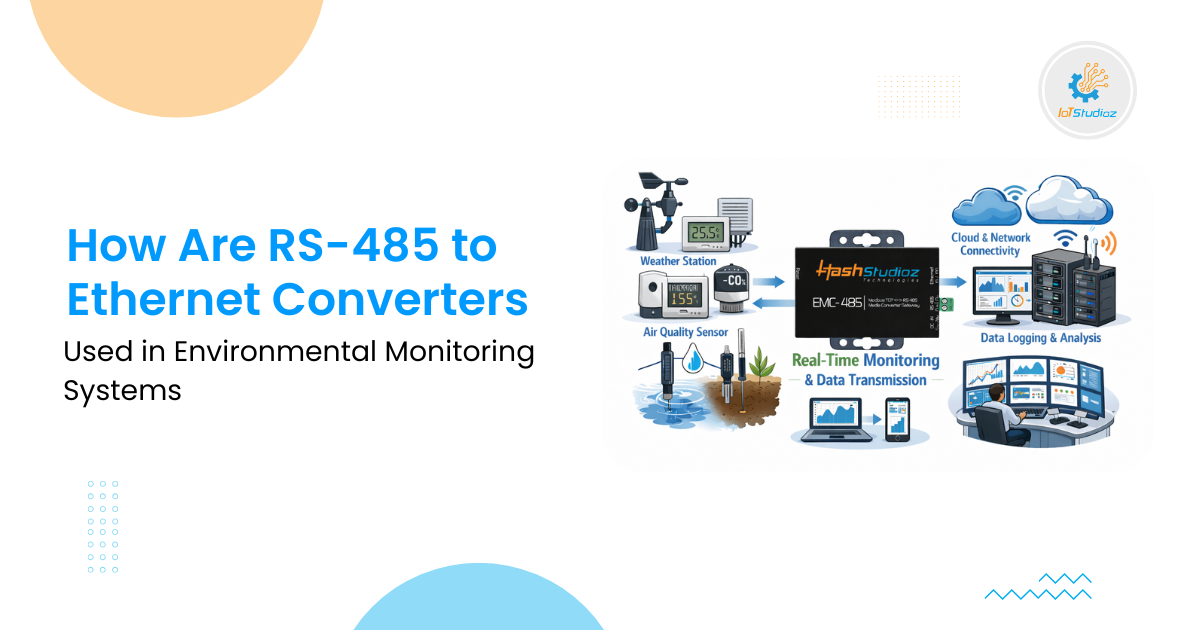
Environmental monitoring systems gather critical data on air quality, water quality, soil conditions, and climate variables to support public health, agriculture, and disaster prevention. Globally, air pollution affects over 90% of the population, while nearly 40% of monitored rivers and lakes show signs of contamination, highlighting the need for continuous, real-time monitoring. These systems rely on reliable communication between sensors, controllers, and data servers, often deployed across wide and remote areas. Many field sensors still use legacy serial interfaces such as RS-485 or RS-232, which remain common in more than 60% of installed industrial and environmental sensing equipment due to their robustness and long-distance capability. To integrate these devices with modern IP-based networks and cloud platforms, RS-485 to Ethernet convert
What Is Environmental Monitoring?
Environmental monitoring is the process of collecting physical, chemical, and biological data from the environment to understand its condition and changes over time. Governments, industries, and scientists rely on this information to make informed decisions related to air pollution control, water quality standards, soil contamination, and climate change trends.
According to the World Health Organization, 99% of the global population breathes air containing high levels of pollutants, which has increased the demand for environmental monitoring systems that can deliver accurate, real-time data to support effective environmental management and protection.
Why Serial Communication Still Matters
Despite the widespread use of Ethernet, USB, and wireless technologies, serial communication remains essential in many industrial and scientific applications. This is because serial interfaces are simple to implement, highly reliable, and perform well in electrically noisy environments. Many sensors, actuators, and measurement devices continue to rely on serial communication due to its low power requirements, predictable behavior, and long-term stability.
Two of the most widely used serial communication standards are RS-485 and RS-232, each serving different application needs:
1. RS-485
RS-485 is designed for long-distance, multi-device communication. It supports cable lengths of up to 1200 meters (approximately 4000 feet) and allows multiple devices (nodes) to share the same communication bus using a multi-drop configuration. By using differential signaling, RS-485 is highly resistant to electrical noise and electromagnetic interference, making it ideal for industrial environments, outdoor installations, and remote monitoring systems.
2. RS-232
RS-232 is a simpler serial standard typically used for point-to-point communication between two devices. It is most effective over shorter distances, usually less than 15 meters, and is commonly found in legacy equipment, laboratory instruments, and configuration or diagnostic interfaces. Although it lacks the noise immunity and distance capability of RS-485, RS-232 remains popular due to its simplicity and ease of implementation.
Network Integration Challenges
Modern systems centralize data collection. Ethernet and IP-based networks deliver data to servers, cloud platforms, or control rooms. However:
- Most legacy sensors do not speak Ethernet.
- Serial cables cannot connect directly to network switches.
- Data must be converted from serial to Ethernet packets in a reliable way.
This gap drives the need for RS-485 to Ethernet Converters and RS-232 to Ethernet Converters.
What Are RS-485 to Ethernet Converters?
RS-485 to Ethernet Converters are devices that convert serial data from RS-485 hardware into Ethernet packets. They allow serial sensors or devices to communicate over a TCP/IP network. These converters typically:
- Accept RS-485 signals
- Encapsulate data in TCP/UDP frames
- Transmit data over standard Ethernet networks
This enables environmental sensors to report data directly to central servers or cloud databases.
What Are RS-232 to Ethernet Converters?
RS-232 to Ethernet Converters perform a similar role for RS-232 devices. They convert the point-to-point serial signals into Ethernet communication. While RS-232 has distance limits and noise issues, these converters extend the reach of legacy devices over modern networks.
Why Use RS-485 to Ethernet Converters in Environmental Monitoring
1. Long Distance Communication
Environmental monitoring sites can spread over acres or kilometers. RS-485 supports long cable runs, but Ethernet cannot reach these distances without repeaters or fiber. Converters allow the best of both:
- Use RS-485 for local sensor networks
- Use Ethernet for long-range data transport
2. Multi-Device Support
RS-485 supports up to 32 devices on one bus. This is ideal for sensor clusters monitoring temperature, humidity, particulate matter, or gas levels. A single converter can link the entire group to the network.
3. Real-Time Data Delivery
Ethernet networks offer fast transmission speeds up to 1 Gbps or more. With converters in place, serial sensors can deliver near real-time data to applications that monitor system health or trigger alerts.
4. Remote Site Monitoring
Many environmental systems operate where physical access is limited. Converters allow remote data collection and control. Maintenance teams can view sensor outputs from anywhere.
5. Cost Efficiency
Installing Ethernet infrastructure to every device can be expensive. Using RS-485 for device clusters and converters at network edges keeps costs lower.
How RS-485 to Ethernet Converters Work
1. Data Flow Overview
Serial sensors transmit data via RS-485. A converter receives bytes, encapsulates them into Ethernet frames, switches route packets to servers, where software decodes serial data continuously as sensors update regularly.
2. Protocol Support
Converters support TCP client/server, UDP, and virtual COM modes. Virtual COM ports make networked serial devices appear local, allowing legacy applications to operate normally without modification on modern networks today.
3. Addressing and Polling
RS-485 sensors often require master-slave protocols like Modbus. Converters can manage polling schedules and ensure proper timing and addressing. This prevents data collisions and missed readings.
How Environmental Monitoring Systems Use These Converters
1. Air Quality Stations
Air quality stations measure PM2.5, ozone, NO2, and CO via RS-485 sensors; converters transmit minute-by-minute data from hundreds of stations to municipal servers, cloud dashboards, and public reporting portals reliably.
2. Water Quality Monitoring
Water quality sensors track pH, turbidity, dissolved oxygen, and conductivity. Sites may include rivers, lakes, or treatment plants. Converters link distributed sensors to SCADA systems. Managers get updates on water status and compliance with regulations.
3. Weather Stations
Weather stations measure temperature, rainfall, wind speed, and humidity. These sensors often use serial communication. Converters provide network access so meteorological data can feed into forecasting models.
4. Soil Condition Monitoring
Agricultural and research systems monitor soil moisture and nutrient levels. Converters send this data to farm management platforms. Farmers adjust irrigation and fertilizer schedules based on real-time feedback.
Comparisons: RS-485 to Ethernet vs RS-232 to Ethernet
| Feature | RS-485 to Ethernet | RS-232 to Ethernet |
| Distance Support | Up to 1200 m (4000 ft) | Up to 15 m (50 ft) |
| Network Topology | Multi-drop bus with many devices | Single point-to-point |
| Noise Immunity | High | Moderate |
| Typical Usage | Outdoor sensor clusters | Point sensors or legacy devices |
| Converter Complexity | Moderate | Lower |
In environmental systems, RS-485 is more common for distributed sensors. However, RS-232 still appears in specific instruments or legacy setups. The choice of converter depends on the device and site design.
Key Benefits of Using Converters
1. Improved Data Access
Networked sensors send data directly to central systems. Teams no longer must visit sites for manual readings.
2. Scalability
With converters, adding new sensors does not require new network infrastructure. Expand RS-485 buses to include more devices.
3. Legacy Integration
Many environmental sensors come with serial outputs. Converters allow these devices to remain useful in modern networks.
4. Flexible Network Design
Ethernet backbone supports VPNs, firewalls, and secure remote access. Converters make serial devices part of a secure system.
5. Reduced Maintenance Costs
With remote monitoring and control, on-site visits drop. Maintenance teams can diagnose issues remotely.
Practical Example: A River Monitoring Network
Consider a river monitoring network with 50 sensor nodes placed along 30 km. Each node measures water quality parameters. Nodes use RS-485 because of long distances and noise resistance.
1. Setup
RS-485 networks run along riverbanks collecting sensor data. Converters are installed at bridge locations, connecting the serial network to Ethernet infrastructure linked with a central monitoring server.
2. Data Flow
Sensors transmit readings every five minutes. RS-485 to Ethernet converters collect, batch, and forward data, while the central server logs information and displays it on monitoring dashboards continuously.
3. Outcomes
Teams can track pollution spikes within minutes. Statistical trends reveal seasonal variations, and alerts trigger when limits are exceeded. This setup enhances response times while reducing monitoring travel costs.
Security Considerations
Converting serial data to Ethernet introduces new security challenges that must be addressed. Best practices include using secure protocols like TLS, placing converters behind firewalls, restricting access to trusted IP addresses, and regularly updating firmware. Implementing these measures helps protect against unauthorized access, data tampering, and ensures reliable, secure communication across the network.
Deployment Tips
1. Choose the Right Converter
Choose a converter by checking protocol support (Modbus RTU, ASCII), operating temperature, power supply options, and management interface, ensuring reliable performance in extreme temperatures or sites with limited power availability.
2. Plan Cabling Carefully
Plan RS-485 cabling carefully using shielded cables and proper grounding to minimize electrical noise, ensuring reliable communication and accurate data transmission across all connected sensors and devices.
3. Test Before Deployment
Before full deployment, set up a small test network to verify data integrity, check latency, and ensure all sensors, converters, and servers communicate reliably under real-world conditions.
4. Monitor Converter Health
Monitor converter health by tracking status indicators such as link status and error rates. Use management tools to collect this data, enabling proactive maintenance and ensuring continuous, reliable system operation.
Common Use Cases in the Field
1. Smart City Air Quality Networks
Smart city air quality networks deploy hundreds of sensors across urban areas, providing real-time public dashboards and maintaining historical records to support regulation, analysis, and informed decision-making.
2. Industrial Emissions Monitoring
Industrial emissions monitoring uses stack gas analyzers with RS-232 interfaces. Ethernet converters integrate these devices into SCADA systems, enabling continuous tracking of emissions and ensuring regulatory compliance.
3. Agricultural Monitoring
Agricultural monitoring uses field sensors to measure soil moisture, sending data to farm management systems. This enables analysis of water use, improving irrigation efficiency and supporting sustainable farming practices.
4. Remote Weather Monitoring
Remote weather monitoring employs solar-powered sensor stations. Converters link sensors through Ethernet or cellular gateways, enabling continuous data sharing with national weather networks for forecasting and climate analysis.
Challenges and Solutions
1. Interference and Noise
Environmental sites often face electrical noise from motors or pumps. RS-485 mitigates interference, but high-quality converters are essential. Use surge protection and twisted-pair cables to ensure reliable, noise-resistant communication.
2. Power Constraints
Remote sensors often rely on solar power. Select converters with low power consumption and high efficiency to ensure continuous operation without overloading limited energy resources.
3. Network Latency
High network traffic can cause data delays. Implement Quality of Service (QoS) on Ethernet switches to prioritize sensor and converter traffic, ensuring timely delivery of critical monitoring information.
4. Data Reliability
Converters should include data buffering to store readings temporarily during network failures, ensuring no data is lost and maintaining reliable, continuous monitoring from all connected sensors.
Future Trends
Environmental monitoring is rapidly expanding, with the global market projected to exceed USD 20 billion by 2030, driven by regulations and climate research. Converters will integrate with IoT platforms, more devices will support IP natively, and edge computing will reduce server load. Legacy sensors will persist, making RS-485 to Ethernet converters essential for bridging old and new technologies.
Conclusion
Environmental monitoring systems rely on accurate, timely data. Many sensors use serial interfaces for robust communication. RS-485 to Ethernet Converters allow these devices to connect to modern networks, extending reach and enabling centralized data collection. RS-232 to Ethernet Converters serve similar roles for point-to-point devices.
These converters improve data access, reduce costs, and support scalable system design. With proper planning, they help meet the growing need for environmental data across cities, industries, and research institutions.
By understanding how these converters work and how to use them effectively, engineers can build reliable monitoring networks that serve both present and future needs.
Frequently Asked Questions
1. What is the role of RS-485 to Ethernet converters in environmental monitoring?
RS-485 to Ethernet converters connect legacy serial sensors to modern IP networks, enabling real-time data transmission from remote air, water, or soil monitoring stations to central servers or cloud platforms.
2. Why is RS-485 preferred for sensors in harsh environmental conditions?
RS-485 uses differential signaling, making it highly resistant to electrical noise, capable of long-distance communication (up to 1200 meters), and suitable for industrial, outdoor, or remote monitoring sites.
3. How do converters handle multiple sensors on the same network?
Converters can collect data from multiple RS-485 devices using multi-drop configurations, then encapsulate and forward the data via Ethernet, allowing centralized monitoring of dozens or hundreds of sensors.
4. Can RS-485 converters work with modern IoT platforms?
Yes, many converters integrate directly with IoT platforms, sending sensor data in real time for cloud dashboards, analytics, or edge computing applications without needing changes to legacy sensors.
5. What measures ensure data reliability during network interruptions?
High-quality converters buffer data locally during network outages, preventing loss of readings and ensuring continuous data integrity once connectivity is restored.