
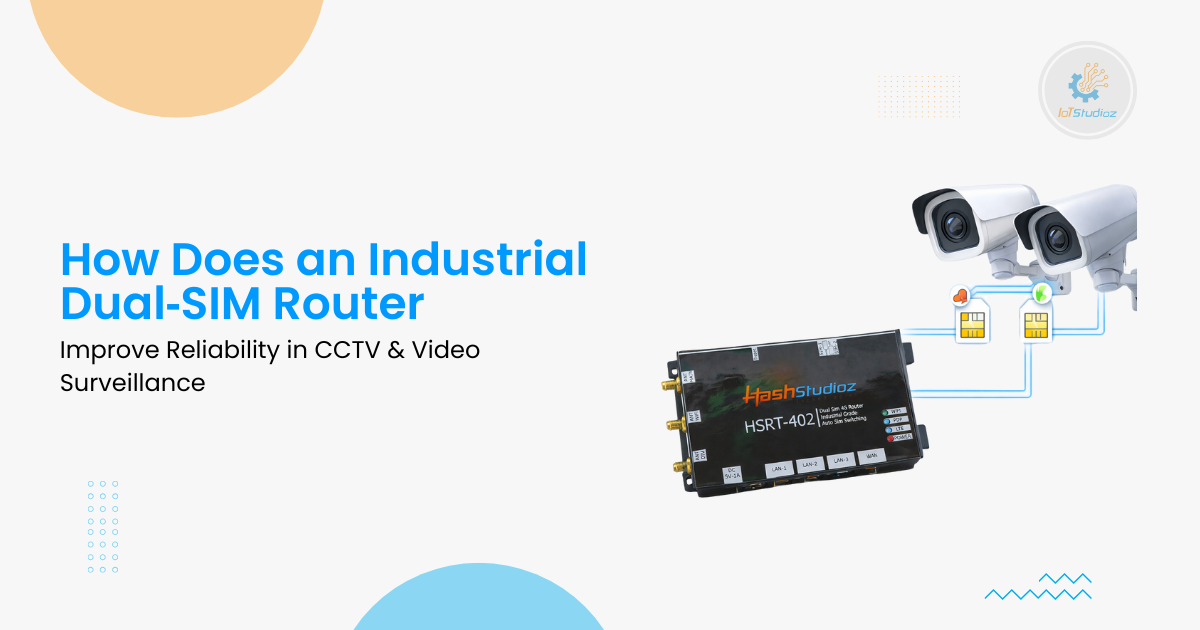
How Does an Industrial Dual‑SIM Router Improve Reliability in CCTV & Video Surveillance
Video surveillance systems are vital for safety, operations, and security, with over 80% of CCTV networks deployed in remote or connectivity-challenged locations. Continuous data flow is essential for transmitting video feeds, alerts, and logs, as network failures create surveillance gaps. Using a Dual SIM Industrial Router can enhance system uptime, achieving up to 99.9% reliable connectivity.
What Is a Dual SIM Industrial Router
A Dual SIM Industrial Router is a ruggedized network device designed for harsh industrial settings. It uses two SIM cards for data communication. The router can switch between SIM cards to maintain connectivity. Industrial models include enhanced hardware, wider temperature range support, and interfaces suited for heavy network loads.
Technical Definition
1. Dual SIM Card Slots: The router contains two active SIM card slots, allowing it to connect to two separate mobile network operators simultaneously. This enables users to switch between networks automatically or manually, depending on signal strength, cost considerations, or data plan limitations.
2. Cellular Network Failover: The router supports automatic failover between the two SIM cards. If the primary network fails due to poor coverage, outages, or congestion, the router seamlessly switches to the secondary network, ensuring continuous connectivity without manual intervention
3. Network Redundancy: In addition to SIM failover, these routers often provide multiple networking interfaces (e.g., Ethernet, Wi-Fi, or VPN support) to ensure redundant communication paths. This is critical for industrial applications such as SCADA systems, remote monitoring, or IoT deployments where downtime can cause operational or financial loss.
4. Industrial-Grade Hardware: Unlike consumer-grade routers, dual SIM industrial routers are built with robust hardware capable of operating in extreme conditions.
They typically feature:
- Shock and vibration resistance to withstand machinery or transport-induced impacts.
- Wide operating temperature ranges, often from -40°C to +75°C, for both indoor and outdoor installations.
- Protection against dust, moisture, and electrical surges, meeting industrial standards such as IP ratings or EMC compliance.
Why Industrial Models Matter
Industrial routers are specifically designed for harsh or mission-critical environments, where consumer-grade routers cannot provide the required reliability or durability. They differ from standard consumer models in several key ways:
1. Extended Temperature Tolerance
Industrial routers are built to operate in extreme temperatures, often ranging from −40°C to +75°C. This allows deployment in outdoor locations, factories, or transportation systems where temperature fluctuations would cause standard consumer routers to fail.
2. EMI/ESD Protection
Electrical environments in factories, substations, or near heavy machinery often generate electromagnetic interference (EMI) and electrostatic discharge (ESD). Industrial routers include built-in shielding and protection circuits to maintain stable operation despite electrical noise that could disrupt consumer devices.
3. Long-Life Cycle Support
Manufacturers of industrial routers provide extended product lifecycles, often exceeding 5–10 years, along with firmware updates and technical support. This ensures that critical infrastructure does not face sudden obsolescence, which is crucial for industries where system downtime has high costs.
4. Enhanced Connectivity Options
Industrial routers offer serial (RS-232/RS-485) and multiple Ethernet ports, enabling connection to legacy devices, cameras, NVRs, sensors, and control systems. These versatile interfaces make them ideal for reliable CCTV, remote monitoring, and industrial automation applications.
5. Reliable Video Transmission in Challenging Locations
The combination of rugged hardware, EMI protection, extended temperature operation, and multiple connectivity options allows industrial routers to maintain constant video or data transmission even in environments where consumer routers would fail. This is essential for surveillance, transportation, oil & gas facilities, and other critical sites.
Why Reliability Is Critical in CCTV & Video Surveillance
CCTV and video surveillance systems play a crucial role in protecting people, property, and infrastructure. They operate around the clock, capturing and transmitting video footage to central monitoring stations. For these systems to be effective, reliability is paramount any lapse can have serious consequences. A temporary network failure or system glitch can result in lost video data, missed alerts, and undetected security breaches, undermining the very purpose of surveillance.
Key Reliability Requirements
To ensure a surveillance system functions effectively, several critical reliability requirements must be met:
1. Continuous Video Upload to Central Servers: Surveillance cameras must stream video data to central servers without interruption. Any delay or loss in transmission can compromise the integrity of stored footage, making it impossible to reconstruct events accurately.
2. Real-Time Event Notification: Alerts for motion detection, access violations, or other security events must reach operators immediately. Delayed notifications can allow incidents to escalate before intervention is possible.
3. Remote Access for Operators: Operators should be able to view live or recorded footage from remote locations. Reliable network connectivity ensures that security personnel can respond quickly, regardless of their physical location.
4. Data Buffering Until Connection Is Restored: In case of temporary network disruptions, cameras must be capable of storing video locally and uploading it once the connection is restored. This buffering prevents permanent data loss and maintains continuous video history.
Consequences of Network Failures
Network reliability is often the weakest link in surveillance systems. Failures can have multiple repercussions:
1. Loss of Footage: Without a stable connection, recorded video may never reach central servers, creating blind spots in coverage.
2. Gaps in Video History: Missing video segments can hinder investigations or audits, making it difficult to reconstruct events accurately.
3. Missed Alarms and Alerts: Real-time notifications may not reach operators, allowing potential security incidents to go unnoticed.
4. Higher Investigation Costs: Recovering missing data or manually piecing together events increases operational costs and resource requirements.
Research indicates that nearly 62% of surveillance system failures are due to network issues rather than camera hardware problems, underscoring the importance of a robust, reliable network infrastructure.1 Investing in redundancy, high-quality network components, and proper monitoring is essential to maintain continuous surveillance and protect assets effectively.
How a Dual SIM Router Works in Surveillance Networks
In modern surveillance systems, continuous connectivity is essential to ensure uninterrupted video streaming, real-time alerts, and remote access. A dual SIM router enhances network reliability by using two SIM cards, allowing connections to two cellular networks simultaneously. The SIMs can be from the same carrier or different carriers, providing flexibility and redundancy.
Key Functions of a Dual SIM Router
1. Failover: One of the most critical functions is automatic failover. If the primary network experiences downtime due to coverage issues or congestion, the router seamlessly switches to the secondary SIM, maintaining continuous network connectivity. This prevents video loss and ensures surveillance operations remain uninterrupted.
2. Load Balancing: Dual SIM routers can distribute network traffic across both SIMs. This load balancing optimizes bandwidth usage, reduces latency, and ensures smoother video transmission, especially for high-resolution CCTV feeds.
3. Priority Rules: Users can define rules for network switching based on criteria such as signal strength, latency, or data usage limits. This ensures the router always uses the most reliable network while adhering to operational or cost constraints.
Operating Modes
Dual SIM routers typically operate in two primary modes to meet different surveillance network needs:
1. Primary/Backup Mode: In Primary/Backup Mode, one SIM card functions as the active primary connection while the second stays on standby. If the primary network fails, the router automatically switches to the backup SIM, ensuring uninterrupted connectivity for critical security systems.
2. Load Balanced Mode: In this mode, both SIMs are actively used simultaneously to carry network traffic, increasing aggregate bandwidth, reducing congestion, and enhancing overall network performance for faster, more reliable connectivity.
Intelligent Switching
Modern dual SIM routers constantly monitor network health, checking metrics like signal strength, latency, and packet loss. Based on these measurements, the router intelligently switches or balances traffic to the best available network, ensuring continuous connectivity.
Benefits for CCTV & Surveillance
1. Continuous video upload: Prevents loss of footage even during network disruptions.
2. Reliable remote access: Security operators can view live or recorded feeds without interruptions.
3. Consistent alert delivery: Motion detection, intrusion alerts, and other notifications reach operators in real time.
4. Reduced operational risks: Minimizes downtime and protects critical infrastructure from blind spots.
By leveraging dual SIM routers, surveillance networks gain resilience, redundancy, and efficiency, making them far more reliable in environments where network stability cannot be guaranteed.
Advantages of Dual SIM for CCTV and Video Surveillance
The benefits of a Dual SIM router in surveillance are measurable and wide‑ranging.
1. Higher Uptime
Redundancy increases uptime. When one network fails, the second SIM keeps connectivity alive. This maintain smooth video transmission.
2. Better Coverage
Using two carriers increases coverage options. If one carrier has weak signal in a location, the second may provide better reception.
3. Consistent Bandwidth
Bandwidth remains consistent with two paths available for data. CCTV streams often require high upload performance. Dual SIM routers allocate traffic efficiently.
4. Reduced Data Loss
Cameras buffer less data when connectivity stays active. Even busy scenes upload video without interruption.
5. Remote Management
Industrial routers enable full remote monitoring and configuration, allowing administrators to manage the network without being physically on-site. They can monitor signal levels, adjust network priorities, and update firmware seamlessly, ensuring continuous connectivity, optimal performance, and reduced maintenance efforts.
Dual SIM 4G LTE Industrial Router: A Step Up
A Dual SIM 4G LTE Industrial Router takes connectivity to the next level by leveraging 4G LTE cellular technology, offering faster speeds, lower latency, and more reliable coverage compared to traditional network solutions.
Why 4G LTE Matters
4G LTE is essential because it provides high throughput of over 150 Mbps, low latency for real-time monitoring, and extensive geographical coverage. This makes it ideal for CCTV systems managing multiple HD streams, ensuring smooth and reliable data transmission.
4G LTE vs. Older Technologies
| Feature | 3G/2G | 4G LTE |
| Max Speed | ≤ 7 Mbps | ≥ 150 Mbps |
| Latency | ~100–300 ms | ~30–70 ms |
| Reliability | Lower | Higher |
| Video Support | Limited | Strong |
Using a Dual SIM 4G LTE Industrial Router thus improves video quality and reduces frame drops.
Technical Features That Enhance Reliability
Industrial dual SIM routers include features built for reliability.
1. Automatic Failover
Automatic failover activates when signal strength falls below a set threshold, network pings fail, or latency exceeds configured limits, ensuring continuous and reliable network connectivity.
2. Multi‑APN Support
Multi‑APN support allows routers to manage multiple APNs, enabling CCTV data separation, secure VPN traffic, and reliable remote access for improved network organization and security.
3. VPN and Secure Tunnels
VPN and secure tunnels protect data using protocols such as IPsec, OpenVPN, and GRE tunnels, ensuring encrypted, safe, and reliable communication across networks.
4. Quality of Service (QoS)
Quality of Service (QoS) manages bandwidth allocation for CCTV traffic, prioritizing video packets, reducing latency for alarm signals, and improving throughput for critical data, ensuring smooth and reliable system performance.
Real‑World Examples of Dual SIM Impact
1. Remote Construction Sites
Construction sites use temporary CCTV to monitor equipment theft. Internet options are limited. A Dual SIM Industrial Router provides reliable upload to cloud servers. A contractor reported zero downtime over six months after implementation.
2. Public Transportation Hubs
Stations and bus depots use multiple camera feeds. Cellular networks help when wired networks fail. Switching to a Dual SIM 4G LTE Industrial Router improved live monitoring availability from 89% to 99.5%.
3. Utility Monitoring
Power substations need constant security surveillance. Dual SIM routers helped maintain connectivity through storms and outages, avoiding video gaps.
These examples demonstrate measurable improvements in reliability and uptime.
Network Failover Logic
Understanding failover logic helps design resilient CCTV networks.
1. Monitoring Algorithms
Monitoring algorithms continuously track signal strength, latency to key servers, and packet loss, allowing the router to maintain optimal performance and quickly respond to network issues.
2. Decision Points
Decision points ensure seamless operation by triggering a switch to the backup SIM, logging the event, and notifying administrators whenever performance falls below set thresholds, maintaining continuous video with minimal human intervention.
Planning and Deployment Guidelines
Effective deployment requires proper planning.
1. Site Survey
Before installation, a site survey measures signal strength for both carriers and identifies the optimal antenna placement to ensure reliable connectivity and optimal router performance.
2. Antenna Design
Antenna design uses high-gain external antennas in weak signal areas, choosing omnidirectional antennas for broad coverage or directional antennas to focus and strengthen the signal where needed.
3. SIM Selection
SIM selection involves choosing carriers by evaluating coverage maps, reviewing performance history, and comparing data plans to ensure reliable and cost-effective connectivity.
4. Power Considerations
Power considerations require a stable supply, incorporating battery backup for outages and surge protection to safeguard the router in industrial environments.
Security Considerations
Video surveillance network security is critical.
1. Encrypted Links
Encrypted links ensure all data is secure, using TLS for web interfaces and VPNs for remote access to protect sensitive information from unauthorized access.
2. Authentication
Authentication should employ strong passwords and, whenever possible, multifactor authentication to enhance security and prevent unauthorized access.
3. Firmware Updates
Firmware updates should be applied regularly to keep the router secure and patch any vulnerabilities.
Performance Metrics and Stats
Measuring performance after deployment is key.
1. Uptime
After deploying dual SIM routers, organizations often report uptime exceeding 99.7%, with downtime from network issues reduced to below 0.3%, ensuring highly reliable and continuous connectivity.
2. Quality of Service
With cellular failover, Quality of Service remains strong even when DSL or cable links fluctuate, maintaining average latency under 60 ms and packet loss below 1% in tested networks.
3. Bandwidth Utilization
Dual SIM 4G LTE routers often maintain average upload bandwidths of 20–50 Mbps, sufficient for multiple HD streams. These metrics show the technical value of dual SIM connectivity.
Cost Vs. Benefits
Dual SIM routers involve higher costs but deliver reduced maintenance, improved uptime, and enhanced security reliability.
1. Costs of Dual SIM Routers
Using dual SIM routers involves both initial and ongoing expenses. The hardware is generally more expensive than standard single-SIM routers, and running two cellular connections requires dual data plans, adding to recurring costs.
2. Benefits and Return on Investment
Despite the costs, dual SIM routers provide significant advantages. Automatic failover reduces maintenance needs and minimizes site visits, while continuous connectivity improves security reliability. Many installations see improved uptime and operational efficiency, often achieving a return on investment within the first year.
Challenges and Limitations
While dual SIM routers significantly improve network reliability, certain challenges remain. Coverage black spots can occur because even dual carriers may share infrastructure, making careful carrier selection essential for true redundancy. High data usage from video feeds can increase costs, which can be managed with data caps, rollover plans, and compression techniques. Additionally, environmental factors such as extreme weather or physical obstructions can still affect signal quality, requiring thoughtful site planning and antenna placement to maintain consistent connectivity.
Future Trends
Future trends in industrial networking point to continued technological evolution. Dual SIM 5G routers will offer higher bandwidth and lower latency, while AI-driven network switching may predict outages and switch proactively. Edge computing will enable on-device analytics, reducing data transfer by processing video locally.
Conclusion
A Dual SIM 4G LTE Industrial Router plays a vital role in enhancing reliability for CCTV and video surveillance. By offering network redundancy, improved coverage, and advanced technical features, these devices protect critical data flows. The addition of 4G LTE support boosts performance even more.
Industrial surveillance systems demand constant connectivity. Dual SIM routers deliver it, reduce data loss, and increase uptime. Their technology ensures that video streams and alerts remain active, even when one network path fails. For any robust surveillance deployment, dual SIM routers are a key component.
Frequently Asked Questions
1. How does a dual-SIM industrial router improve CCTV system reliability?
A dual-SIM industrial router improves CCTV reliability by providing automatic cellular failover, ensuring uninterrupted video streaming and alerts when one network fails or becomes unstable.
2. Why is dual-SIM connectivity important for remote CCTV surveillance locations?
Dual-SIM connectivity ensures continuous internet access in remote areas by switching between mobile carriers, reducing downtime caused by weak signals, outages, or network congestion.
3. Can a dual-SIM industrial router prevent video loss in CCTV systems?
Yes, dual-SIM routers maintain continuous connectivity through automatic failover, minimizing video upload interruptions and preventing data loss during network disruptions or carrier failures.
4. Are dual-SIM 4G LTE routers suitable for high-resolution CCTV video streaming?
Dual-SIM 4G LTE routers support high bandwidth and low latency, enabling smooth HD and 4K CCTV video streaming while maintaining stable performance through intelligent traffic management.
5. What makes industrial dual-SIM routers better than consumer routers for CCTV?
Industrial dual-SIM routers offer rugged hardware, wider temperature tolerance, EMI protection, long lifecycle support, and network redundancy, making them ideal for mission-critical CCTV surveillance deployments.