
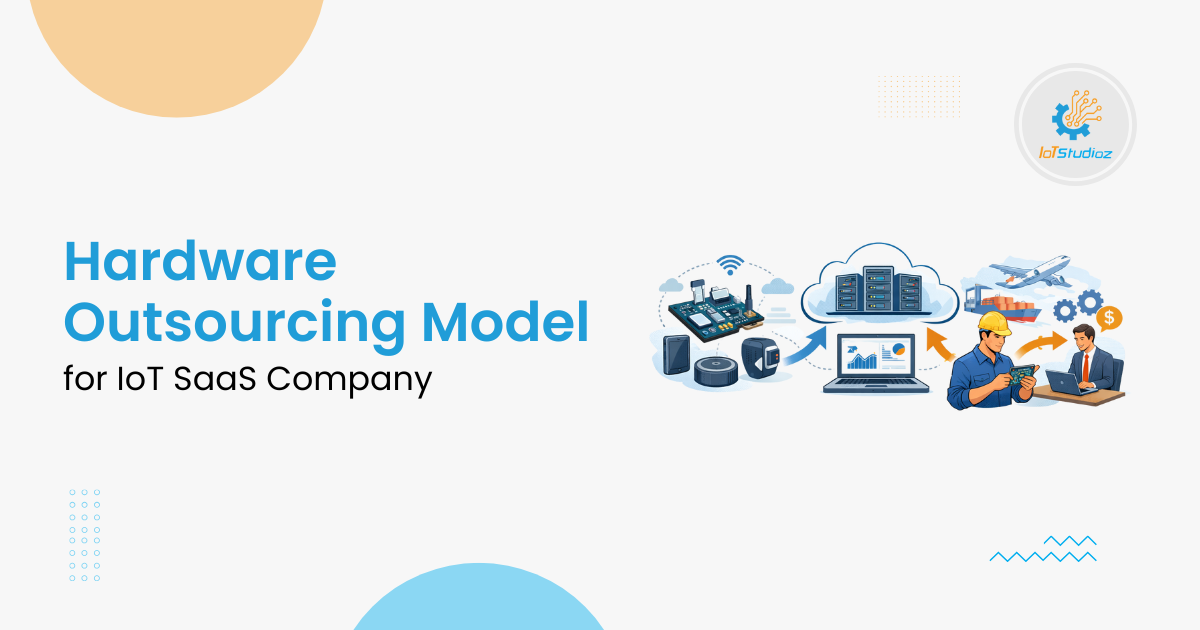
Hardware Outsourcing Model for IoT SaaS Company
The Internet of Things (IoT) has changed how devices connect and share data. Many companies now build IoT solutions that span hardware and software. An IoT SaaS (Software as a Service) company typically focuses on cloud services, analytics, and applications. Yet, these services require reliable hardware to collect data at the edge. Designing and manufacturing hardware in-house can burden a SaaS company with high costs, skill gaps, and time delays. A hardware outsourcing model helps solve these challenges. This article explains how to plan and run hardware outsourcing for an IoT SaaS company. We include terms like Rs 485 IoT Gateway and provide facts, arguments, and examples.
Why Hardware Matters for IoT SaaS Companies
An IoT SaaS product needs strong hardware to function in real environments. Without reliable hardware, data collection fails. That leads to poor customer satisfaction.
- IoT devices send data to cloud platforms for processing.
- Connectivity protocols such as Ethernet, Wi-Fi, Cellular, and RS-485 are common.
- Gateways convert and forward data from sensors into cloud services.
- For industrial applications, an Rs 485 IoT Gateway connects field equipment with cloud platforms.
According to market data, the global IoT hardware market will reach over $36 billion by 2028, growing at a CAGR of 12%. This growth shows rising demand for effective IoT devices and gateways.
What Is Hardware Outsourcing?
Hardware outsourcing means hiring external partners to perform hardware design and manufacturing tasks. Instead of building a team inside the company, the IoT SaaS leader works with specialists. These partners could be:
- Contract engineering firms
- Original design manufacturers (ODMs)
- Contract manufacturers (CMs)
- Hardware consultants
Outsourcing covers tasks such as:
- PCB design and layout
- Firmware development
- Component sourcing
- Prototyping
- Mass production
Advantages of Hardware Outsourcing for IoT SaaS
Hardware outsourcing offers many benefits for an IoT SaaS company. These include cost savings, faster product cycles, and access to expert skills.
1. Cost Control
Building a full hardware team in-house demands high salaries, tools, and workspace. Outsourcing shifts most of these costs to a partner. A study shows that outsourcing can lower operational costs by up to 30%.
2. Fast Time to Market
Hardware development takes time. A partner with established workflows and tools moves projects forward faster. This speed helps companies introduce devices like the Rs 485 IoT Gateway sooner.
3. Access to Specialized Skills
Hardware engineering requires deep knowledge of electronic design, manufacturing standards, and communication protocols. Outsourcing gives access to experts who know industrial protocols like RS-485, Modbus, and sensors.
4. Risk Reduction
Partners with production experience help identify manufacturing risks early. They design for manufacturability. This prevents costly redesigns later.
Risks and Challenges of Hardware Outsourcing
Outsourcing is not risk-free. A company must know and manage these risks.
1. Quality Control Issues
Poor quality parts or assembly can damage reputation. The company must enforce strict quality checks and agree on standards before work begins.
2. Communication Gaps
Misunderstandings between teams cause delays. Clear documentation and regular meetings are required.
3. Intellectual Property Concerns
Protecting IP is critical. NDAs (non-disclosure agreements) and clear contracts help secure designs and firmware.
4. Partner Dependence
Over-dependence on one partner creates risk. Diversifying suppliers can reduce this dependence.
Key Components of an Effective Outsourcing Model
A well-structured outsourcing model helps an IoT SaaS company work efficiently with hardware partners. It should include clear goals, strong processes, and measurable checkpoints.
1. Define Hardware Requirements
At the start, define functional and non-functional requirements for the hardware.
- Connectivity standards (e.g., RS-485, Ethernet)
- Power requirements
- Environmental conditions (temperature, humidity)
- Security and encryption needs
- Regulatory compliance (CE, FCC)
For example, an Rs 485 IoT Gateway must support serial communication at 9600 bps or higher. It also needs surge protection for industrial settings.
2. Select the Right Partner
Choose partners with proven track records in IoT hardware. Use these criteria:
- Experience with similar products
- Quality certifications (ISO 9001)
- Good financial stability
- Strong supply chain
- Transparent communication
Ask for past project examples and references.
3. Create Clear Contracts
Contracts must cover:
- Scope of work
- Delivery deadlines
- Cost breakdown
- Quality standards
- IP ownership
- Warranty terms
Disputes often arise from vague contracts. Clear terms prevent future issues.
4. Prototype Early and Test Often
Design prototypes first. Test them under real conditions. Collect feedback and refine designs.
For instance, with an Rs 485 IoT Gateway prototype, test all RS-485 ports with multiple devices. Check for signal noise, voltage mismatches, and data loss.
5. Establish Quality Control
Set quality benchmarks and inspection criteria.
- Incoming material inspection
- In-process checks
- Final product testing
- Automated test equipment (ATE) where possible
Use metrics like:
- Defects per million (DPM)
- First-pass yield (FPY)
- On-time delivery rate
Reporting these helps track partner performance.
5. Plan for Production and Scaling
When prototypes pass tests, plan for volume production. Ensure your partner has:
- Enough production capacity
- Backup suppliers for components
- Reliable logistics
This becomes important when demand grows rapidly.
Case Study: Outsourcing an Rs 485 IoT Gateway
Background
A mid-size IoT SaaS company focused on smart building analytics. The company needed a robust gateway to collect data from temperature, energy meters, and access systems. Many sensors used the RS-485 protocol.
The company had a cloud platform but lacked hardware expertise. They decided to outsource the gateway’s hardware design and production.
Approach
- Requirement Gathering: The team defined the key functions. They wanted:
- Four RS-485 ports
- Support for Modbus RTU
- Ethernet and Wi-Fi connectivity
- DIN rail mounting
- Partner Selection: They shortlisted three candidates. They chose one with prior RS-485 and industrial design experience.
- Prototyping Phase: The partner delivered a working prototype in 12 weeks. The company performed field tests at client sites.
- Iterative Improvements: Engineers found noise on RS-485 lines. Designers added better termination resistors and isolated power supplies. A second prototype passed tests.
- Mass Production: The production began in a certified facility. Quality checks ensured that each gateway met specifications.
Results
- The gateway shipped on time.
- Early field reports showed 99.7% reliability.
- Customer adoption increased by 40% within six months.
- The SaaS company saved an estimated 20% in development costs compared to in-house design.
This case shows how outsourcing can deliver high-quality products without heavy internal investments.
Metrics to Track in Hardware Outsourcing
To measure success, track objective metrics. These help spot issues early.
1. Time to Market
Measure the time from concept to production. Lower times suggest efficient collaboration.
2. Product Quality
Use metrics such as:
- Defects per unit
- Field failure rate
- Customer return rate
For example, aim for fewer than 50 defective units per million shipped devices.
3. Cost Metrics
Track:
- Engineering cost
- Manufacturing cost per unit
- Cost of quality inspections
Compare actuals with budgets quarterly.
4. Supplier Performance
Measure:
- On-time delivery
- Response time for issues
- Change request turnaround
These metrics show partner reliability.
Security Considerations in Outsourced Hardware
IoT devices face security threats. Companies must build hardware that prevents breaches.
1. Secure Boot
Ensure firmware only runs if it carries a valid signature. This prevents unauthorized code.
2. Encryption
Use strong encryption for data at rest and in transit.
3. Firmware Updates
Design for secure over-the-air (OTA) updates. This helps patch vulnerabilities quickly.
4. Hardware Trust Anchors
Include hardware elements like Trusted Platform Modules (TPMs) when possible.
A partner must understand these security requirements. Include them in contracts and tests.
Supply Chain and Component Risks
IoT devices depend on global supply chains. The company must account for shortages, delays, and cost changes.
1. Multiple Supplier Strategy
Work with alternate suppliers for critical parts. This reduces risk when a vendor faces delays.
2. Inventory Planning
Keep strategic buffer stocks for long-lead components.
3. Lead Time Monitoring
Track lead times monthly. Long lead times require early ordering.
For example, semiconductor lead times can range from 8 to 26 weeks depending on chip type.
Regulatory Compliance
IoT devices must meet local and regional regulations.
- FCC/CE for radio devices
- RoHS/REACH for materials
- Safety standards for industrial equipment
Non-compliant devices cannot ship legally.
An outsourcing partner should have experience with certification labs. This speeds approval and keeps cost low.
Conclusion
A strong hardware outsourcing model can drive growth for an IoT SaaS company. It allows the company to focus on cloud software and value-added services. Outsourced teams bring hardware skills, reduce cost, and improve time to market. When done right, this model delivers reliable products such as an Rs 485 IoT Gateway that integrate seamlessly with cloud platforms.
Effective outsourcing needs clear requirements, accountable partners, quality control, and well-defined metrics. Security, supply chain management, and regulatory compliance must also be part of planning. By following good practices, an IoT SaaS company can compete effectively in a market where hardware and software depend on each other for success.
FAQ
1: Why do IoT SaaS companies outsource hardware development?
IoT SaaS companies mainly focus on cloud platforms and data services. Hardware development needs different skills, tools, and manufacturing setups. Outsourcing helps reduce capital costs and engineering overhead. It also shortens product development time. Studies show outsourcing can cut hardware development costs by 20–30%.
2: What types of hardware are commonly outsourced in IoT projects?
Most IoT SaaS companies outsource edge devices and gateways. These include sensor nodes, industrial gateways, and communication modules. Devices like an Rs 485 IoT Gateway are often outsourced due to protocol complexity. These gateways require experience with industrial signals and noise control.
3: How does outsourcing affect product quality?
Product quality depends on partner selection and controls. Experienced partners follow design and manufacturing standards. Quality improves when clear specifications and test plans exist. Metrics like first-pass yield and defect rates help track performance. Many outsourced IoT devices achieve over 99% production yield.
4: What security risks exist in outsourced IoT hardware?
Security risks include firmware tampering and weak hardware protection. These risks reduce when security requirements are defined early. Secure boot, encrypted communication, and OTA updates are essential. Contracts should include security testing and audit rights. Hardware security flaws account for around 30% of IoT breaches.
5: How long does outsourced IoT hardware development take?
Development time depends on complexity and testing needs. A basic gateway may take 3–4 months to prototype. Industrial devices like an Rs 485 IoT Gateway may need 5–6 months. Field testing and certification can add extra weeks. Outsourcing often saves time compared to building an internal team.