
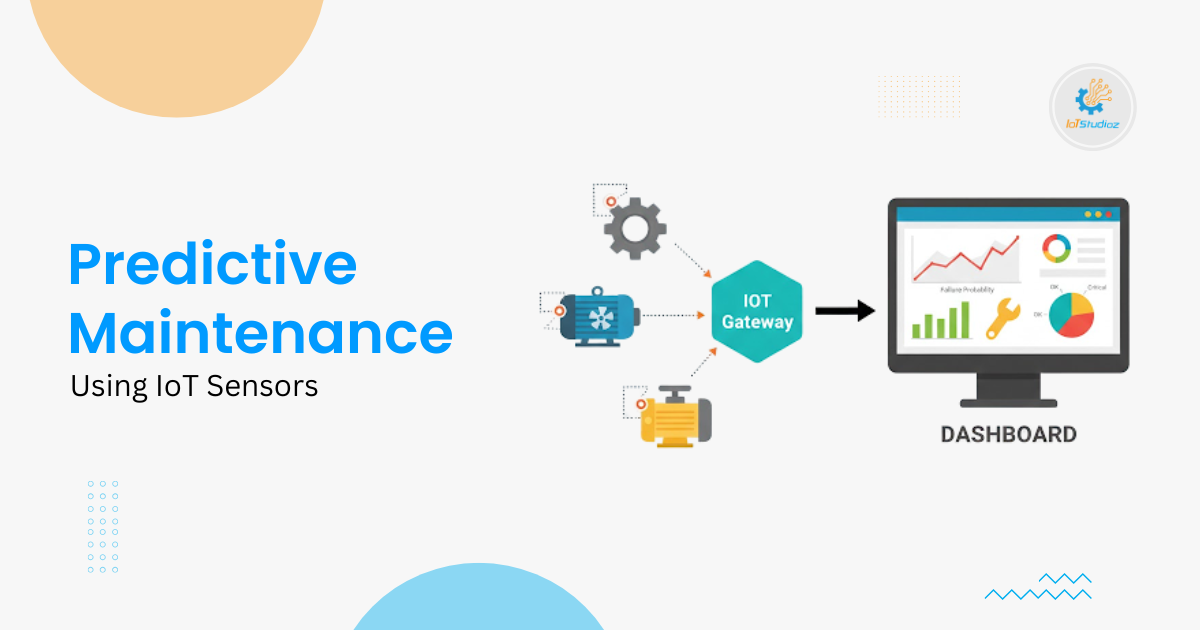
Predictive Maintenance Using IoT Sensors
Industrial downtime is a major challenge for businesses. A study by Deloitte found that unexpected equipment failures cost manufacturers around $50 billion globally each year. Sudden machine breakdowns can cost a company anywhere from $5,000 to $50,000 per hour, depending on the industry. These figures highlight the need for effective maintenance strategies.
Traditional maintenance approaches are often reactive and inefficient. Predictive maintenance addresses this problem by using Internet of Things (IoT) sensors to continuously monitor equipment performance. It identifies issues before they cause complete failures, allowing businesses to take action in time. Key devices such as the RS-485 IoT Gateway and Industrial IoT Gateway play a critical role by connecting sensors to systems, enabling seamless collection and analysis of machine data.
Studies show that predictive maintenance can reduce machine downtime by 30–40% and cut maintenance costs by 25–30%. Timely interventions can also extend equipment lifespan by 20–25%. These advantages are driving industries, from manufacturing to energy, to adopt IoT-based maintenance solutions.
What Is Predictive Maintenance?
Predictive maintenance means identifying machine problems before they happen. Traditional maintenance works on fixed schedules. Predictive maintenance uses sensor data and analysis to decide when to service equipment.
It can reduce unplanned downtime, cut maintenance costs, extend machine life, and improve production quality.
Sensors collect vibration, temperature, pressure, and current data. They send it to analytics systems in real time. The systems detect unusual patterns and alert maintenance teams.
The Role of IoT in Predictive Maintenance
IoT stands for Internet of Things. In industry, it means devices and sensors that collect and share data. IoT allows machines to be monitored continuously.
Key Benefits of IoT Sensors
- Monitor machines in real time: This helps see how equipment is working at any moment.
- Detect faults early: Small issues can be found before they cause breakdowns.
- Send data to cloud or local servers: Sensor data can be stored and checked easily.
- Reduce manual inspection: Fewer physical checks are needed on machines.
IoT sensors work in tough environments. They send data through gateways such as the RS-485 IoT Gateway and Industrial IoT Gateway for processing.
IoT Sensor Types in Predictive Maintenance
Different sensors are used to measure different conditions in machines.
1. Vibration Sensors
Vibration sensors are used on rotating machines. They help detect imbalance, misalignment, and bearing issues.
2. Temperature Sensors
Temperature sensors monitor heat levels in equipment. They help identify overheating and lubrication problems.
3. Pressure Sensors
Pressure sensors are used in hydraulic and pneumatic systems. They help detect leaks and blockages.
4. Current and Voltage Sensors
Current and voltage sensors monitor electrical load. They help detect overloads and short circuits.
All sensors generate data that must be sent in a reliable way. Gateways are used to handle this data.
Data Communication With Gateways
Collecting data is not enough. Sensors often sit far apart or in remote areas. Gateways gather data and send it to analytics systems.
The two main types of gateways in industry are:
- RS-485 IoT Gateway
- Industrial IoT Gateway
What Is an RS-485 IoT Gateway?
An RS-485 IoT Gateway converts serial data from sensors into network data. RS-485 is a standard for long-distance, low-noise communication in industry.
Why RS-485 Matters
RS-485 allows multiple devices on one bus, supports long cables up to 1200 meters, and uses balanced signals to resist noise.
RS-485 is used on motors, PLCs, and sensors.
How the Gateway Works
- Sensors send serial data via RS-485: The sensors send their readings through RS-485.
- Gateway reads the data:The gateway picks up this data from the sensors.
- It formats and encrypts data:The data is cleaned up and protected.
- Sends it over Ethernet, cellular, or Wi-Fi to servers: The data is then sent to servers using the available network.
The gateway connects old industrial devices to modern IoT systems.
What Is an Industrial IoT Gateway?
An Industrial IoT Gateway supports more protocols and functions than RS-485 gateways.
Key Features: It supports Modbus, OPC UA, and MQTT, offers both wired and wireless connections, can do edge computing, and is built for tough industrial conditions.
Gateway Functions in Detail: It converts one protocol to another, filters out unnecessary data, does local processing at the edge, and sends data securely.
Industrial IoT Gateways often include RS-485 ports, Ethernet, USB, cellular, and Wi-Fi.
How Sensors and Gateways Work Together
A predictive maintenance system usually works like this:
- IoT Sensors collect real-time data.
- RS-485 IoT Gateway gathers serial data on the floor
- Industrial IoT Gateway aggregates and formats data for analytics
- Analytics Engine predicts faults.
- Dashboard shows alerts to technicians.
Example Workflow
- A vibration sensor detects abnormal frequency.
- Data goes via RS-485 to a gateway.
- RS-485 Gateway forwards data to Industrial IoT Gateway
- The Industrial IoT Gateway sends it to the analytics software.
- The system triggers a maintenance alert.
Data Analytics in Predictive Maintenance
After data reaches servers, analytics identify issues. Two main methods are used:
1. Threshold-Based Rules
Rules define safe ranges, and alerts trigger when readings exceed limits. These rules are simple to set up and work well for obvious issues.
2. Machine Learning Models
Algorithms learn how machines behave and detect unusual patterns. They can find hidden issues, need historical data, and can predict failure timing.
Real-World Examples
The examples below show how predictive maintenance is used in real industrial environments. They explain how sensor data helps detect problems early. Each case highlights practical results from actual operations.
1. Manufacturing Plant
Motors had vibration and temperature sensors. Abnormal heat predicted bearing failure. Repairs avoided motor downtime.
2. Oil and Gas Pipeline
Pressure sensors monitored pipelines. RS-485 IoT Gateways transmitted long-distance data. Leaks were detected and repaired early.
3. Automotive Assembly Line
The Industrial IoT Gateway collected data from multiple stations. Machine learning predicted robotic arm torque issues. Parts were replaced before failure.
Challenges in Implementation
There are a few challenges when setting up predictive maintenance. If sensors are not calibrated properly, they can give wrong readings. Because of this, correct installation is very important.
Industrial sites also have a lot of electrical noise. This can affect data transfer. Using an RS-485 IoT Gateway helps keep communication stable.
Another issue is integration. Many older machines do not support modern protocols. Industrial IoT Gateways help connect them, but the process still takes time and effort.
Security is also a concern. IoT networks need encrypted communication. Gateways must support secure protocols to protect data.
Benefits of Using Gateways in Predictive Maintenance
Gateways help convert old signals into IoT-ready formats. They send data quickly and can run edge computing for faster response. They also help keep networks stable. Because of this, the system reduces server load and data delays.. Gateways make it easier to connect older machines to new systems. They also help manage data from many sensors at the same time. This improves system reliability during daily operations. It also helps maintenance teams react faster to issues.
Key Factors for Selecting Gateways
Consider these before selecting gateways:
1. Communication Protocol Support: Gateways must handle RS-485, Modbus, MQTT, and any needed protocols.
2. Processing Capabilities: Edge computing needs enough CPU and memory.
3. Connectivity Options: Devices use Ethernet, Wi-Fi, or cellular connections to send data..
4. Security Features: Gateways should have encryption, authentication, and secure firmware updates.
Deployment Best Practices
Some tips:
It is better to start small and run a pilot on key machines first. Sensors should be reliable and work accurately in real operating conditions. Using backup or redundant networks helps reduce data loss if one connection fails. Maintenance teams also need proper training so they understand new tools and alerts.
The Future of Predictive Maintenance
Predictive maintenance will grow with IoT and analytics. Trends include:
- Edge AI: More processing near sensors
- 5G Connectivity: Faster and more reliable networks
- Standardized Protocols: Easier integration
- Smart Actuators: Machines that adjust operations automatically
Conclusion
Predictive maintenance with IoT sensors improves machine management. Combining sensors with the RS-485 IoT Gateway and the Industrial IoT Gateway gives a clear view of machine health. This allows maintenance before failures happen.
It reduces downtime, improves safety, and extends equipment life. Predictive maintenance is now standard in industrial operations.
Frequently Asked Questions
1. What is predictive maintenance using IoT sensors?
Predictive maintenance using IoT sensors involves monitoring equipment in real-time to predict failures before they occur. Sensors collect data such as temperature, vibration, pressure, and current, and analysts use this data to identify patterns that indicate potential issues. This approach reduces downtime, extends equipment life, and lowers maintenance costs.
2. How do IoT sensors help prevent unexpected machine failures?
IoT sensors continuously track the condition of machinery and transmit data to analytics platforms. By analyzing this data, predictive algorithms can detect anomalies, such as unusual vibration or overheating, allowing maintenance teams to act before a breakdown occurs.
3. Why is an RS-485 IoT Gateway important in predictive maintenance?
An RS-485 IoT Gateway enables robust and reliable communication between industrial sensors and cloud-based monitoring systems. RS-485 supports long-distance data transmission in harsh environments, making it ideal for industrial predictive maintenance applications.
4. Can predictive maintenance using IoT sensors reduce operational costs?
Yes. By predicting failures before they occur, companies can avoid costly unplanned downtime, reduce emergency repair expenses, and optimize spare part inventory. Over time, predictive maintenance often provides a higher return on investment compared to reactive maintenance strategies.
5. How is sensor data collected and analyzed for predictive maintenance?
IoT sensors gather continuous data, and gateways (like RS-485 IoT Gateways) transmit this data to cloud platforms or local servers. Advanced analytics, machine learning, or AI algorithms then identify patterns or anomalies that indicate potential equipment failure.