
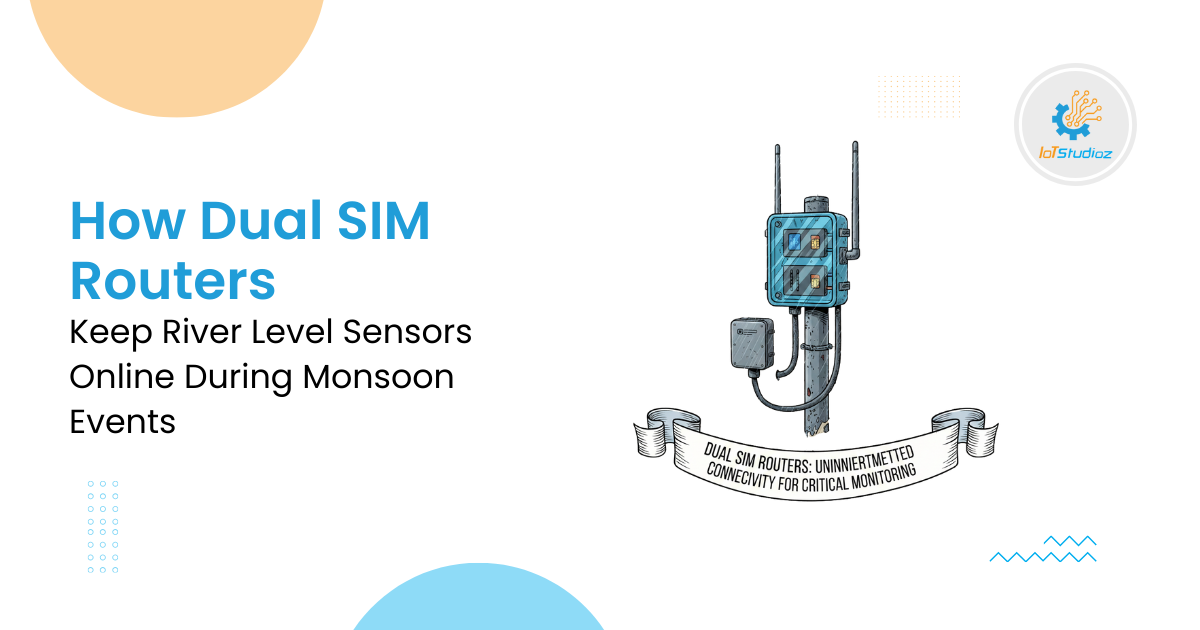
How Dual SIM Routers Keep River Level Sensors Online During Monsoon Events
Monitoring river levels is vital for flood forecasting, water resource management, and public safety. During monsoon seasons, especially in flood-prone regions like India and Southeast Asia, river gauges and sensors must stay reliably connected to remote monitoring systems. However, heavy rainfall, lightning, and infrastructure damage can disrupt communications. In such situations, network resilience becomes mission-critical. This article examines how robust connectivity can be maintained using Dual SIM Industrial Router technology, particularly Dual SIM 4G LTE Industrial Router solutions.
We explore why network failures occur, how dual SIM routers address these challenges, relevant statistics, technical mechanisms for failover, and real-world examples to explain how these systems keep river level sensors online when connectivity matters most.
Why Connectivity Matters for River Level Sensors
River level sensors transmit critical hydrological data to centralized servers and dashboards. Agencies rely on this data to:
- Trigger flood warnings
- Control sluice gates and pumping systems
- Support hydrological forecasting models
- Provide alarms for emergency responders
During monsoon events, rainfall rates can exceed 200 mm/day in many regions, leading to rapid changes in river stage and flash flooding risks. Yet the same weather that raises river levels also degrades communications infrastructure. In extreme rain and wind, network reliability drops due to equipment damage, interference, and service outages, interrupting data flow exactly when it is needed most.
Common Causes of Network Failures During Monsoon
Rain and storms impact communications in several ways:
- Physical damage to cell towers and power systems
- Protein water ingress in infrastructure and fibre splice points
- Radio wave scattering due to raindrops and atmospheric moisture
- Network congestion as large populations shift to cellular data during weather events
These disruptions can prevent river sensors from transmitting measurements, leading to data gaps and delayed warnings. Without reliable connectivity, automated monitoring systems cannot trigger alerts accurately. Today’s remote monitoring systems must maintain connectivity under adverse conditions.
What Is a Dual SIM Industrial Router?
A Dual SIM Industrial Router is a ruggedized network device that supports two separate cellular connections through two SIM cards. These routers are engineered for tough environments, integrating advanced networking protocols and hardware that maintain connectivity under harsh weather and remote conditions.
A Dual SIM 4G LTE Industrial Router extends this concept by using 4G cellular networks that deliver higher throughput and broader coverage than older technologies. These routers also support additional features like VPN security, remote configuration, and real-time network health monitoring.
Differentiating From Consumer Routers
Industrial routers differ from consumer devices in several ways:
- Rugged hardware that withstands temperature extremes, vibration, and moisture
- Wide power input ranges (e.g., 9–48 V DC) suitable for industrial and solar systems
- Multiple physical interfaces (Ethernet, RS-485, RS-232) for sensor integration
- Network resilience features such as redundancy, load balancing, and automatic failover
These capabilities make industrial routers suitable for mission-critical applications where service uptime is essential.
Dual SIM Redundancy: The Core Mechanism
The most important feature of a Dual SIM Industrial Router is its ability to maintain network connectivity through redundancy. This is achieved through two separate cellular links, typically connected to different mobile network operators (MNOs).
When the primary link degrades or fails, the router quickly switches to the secondary network, preventing service interruptions. This process is known as automatic failover.
How Automatic Failover Works
- Continuous Link Monitoring
- Fast Switching
- Carrier Diversity
- Using SIMs from different carriers prevents single-operator outages from affecting both links simultaneously.
- Using SIMs from different carriers prevents single-operator outages from affecting both links simultaneously.
- Failback Management
- Once the primary network is restored, routers can revert or stay on the secondary link based on configurable rules.
This redundancy minimizes interruptions and provides high availability for remote sensors.
Why Dual SIM 4G LTE Is Optimal for Monsoon Monitoring
A Dual SIM with 4G LTE support delivers several advantages for river level sensor networks:
1. Broader Coverage
4G LTE networks often span wider geographic areas than older networks. This improves signal availability, especially in rural watersheds and remote river basins.
2. Higher Throughput
4G LTE provides sufficient bandwidth for continuous data telemetry, image uploads, and real-time dashboards.
3. Multi-Network Support
Modern routers can attach SIMs from different carriers. If one operator’s network is congested or down, the router switches to the other SIM automatically.
4. Compatibility With Legacy Networks
Many Dual SIM 4G LTE Industrial Routers support fallback to 3G or 2G where LTE coverage weakens, further improving availability.
System Availability and Uptime Impact
Network availability matters for emergency monitoring. Industry targets for uptime in critical applications are often set at 99.99% or higher. This equates to less than 53 minutes of downtime annually.
Impact of Redundancy on Uptime
- Redundancy through dual SIM decreases risk of single-network failures.
- Studies show dual-network setups reduce communication downtime by over 80% compared to single links.
- Dual SIM routers can help systems consistently achieve availability nearing 99.999%.
For river monitoring networks, this means fewer blind intervals when rainfall and river stage change rapidly.
Technical Benefits for River Sensor Networks
Dual SIM Industrial Routers provide several technical advantages for water monitoring systems:
1. Continuous Data Flow
With automatic failover, sensor data continues to flow uninterrupted, even when one network path fails.
2. Scalable Network Architecture
These routers can support multiple sensors, edge devices, and gateways, allowing wide deployment across river basins.
3. Remote Monitoring and Management
Administrators can remotely check network performance, update firmware, and adjust failover rules, reducing field visits.
4. Network Load Balancing
Some routers distribute data traffic over both SIMs, enhancing throughput for high–volume telemetry or video.
5. Secure Communication
Built-in VPN and encryption features protect data, even during network transitions.
Example Deployment: Rainy Season in a River Basin
Scenario: A government hydrology department deploys river level sensors at 50 sites along a major river. These sensors send water level data every minute to a central monitoring system.
Without Dual SIM Connectivity
During intense monsoon rain:
- A storm damages local cell tower power systems.
- Sensor sites lose connectivity.
- Critical flooding data fails to reach control centers.
Result: Delayed warnings and interrupted data logs.
With Dual SIM Industrial Router
At each site, a Dual SIM 4G LTE Industrial Router connects two carriers:
- Carrier A suffers an outage.
- The router automatically switches to Carrier B in <300 ms.
- Sensor data continues flowing.
Result: Continuous data collection, real-time warnings, and no data gaps during high river levels.
Deployment Best Practices
To maximize reliability:
1. Use Diverse Carriers
Ensure both SIMs use different operators to avoid correlated outages.
2. Set Appropriate Failover Thresholds
Configure latency, signal strength, and packet loss thresholds to trigger intelligent switching.
3. Monitor Usage
Track data use to avoid unexpected throttling or overages.
4. Test Failover Periodically
Simulate outages to validate failover behavior and thresholds.
5. Integrate Power Backup
Pair routers with solar or UPS systems to keep communication online if power grid fails.
Conclusion
Reliable connectivity for river level sensors is essential during monsoon events when weather stress intensifies both water levels and communications challenges. A Dual SIM Industrial Router, particularly a Dual SIM 4G LTE Industrial Router, provides resilient, high-availability connectivity that keeps data flowing even when networks falter.
By leveraging dual cellular links with automatic failover, robust hardware suited for outdoor installations, and features like remote management and secure communication, these routers offer a dependable foundation for mission-critical environmental monitoring systems. Redundancy helps achieve uptime levels that significantly reduce the risk of data loss and delayed responses – ensuring hydrological networks remain online even in the toughest conditions.
FAQs
1. Why are Dual SIM routers important for river level sensors during monsoon?
- Dual SIM routers provide network backup.
- If one cellular network fails due to rain or outages, the router switches to another network.
- This keeps river level sensors online during heavy rainfall and floods.
2. How does a Dual SIM Industrial Router differ from a normal cellular router?
A Dual SIM Industrial Router is built for harsh environments.
It supports wide temperature ranges, stable power input, and long uptime.
Normal routers lack these features and fail more often during monsoon conditions.
3. What role does a Dual SIM 4G LTE Industrial Router play in flood monitoring?
- A Dual SIM 4G LTE Industrial Router ensures fast and stable data transfer.
- It sends real-time river level data to control centers without interruption.
- This helps authorities issue timely flood alerts and warnings.
4. How fast does failover occur in Dual SIM routers?
- Failover usually happens within 200 to 500 milliseconds.
- This speed prevents data loss during network switching.
- River sensors continue sending readings without noticeable delay.
5. Are Dual SIM routers suitable for remote and rural river locations?
- Yes, they work well in remote areas.
- They support multiple network operators and signal fallback options.
- This improves connectivity where network coverage is weak or unstable.