
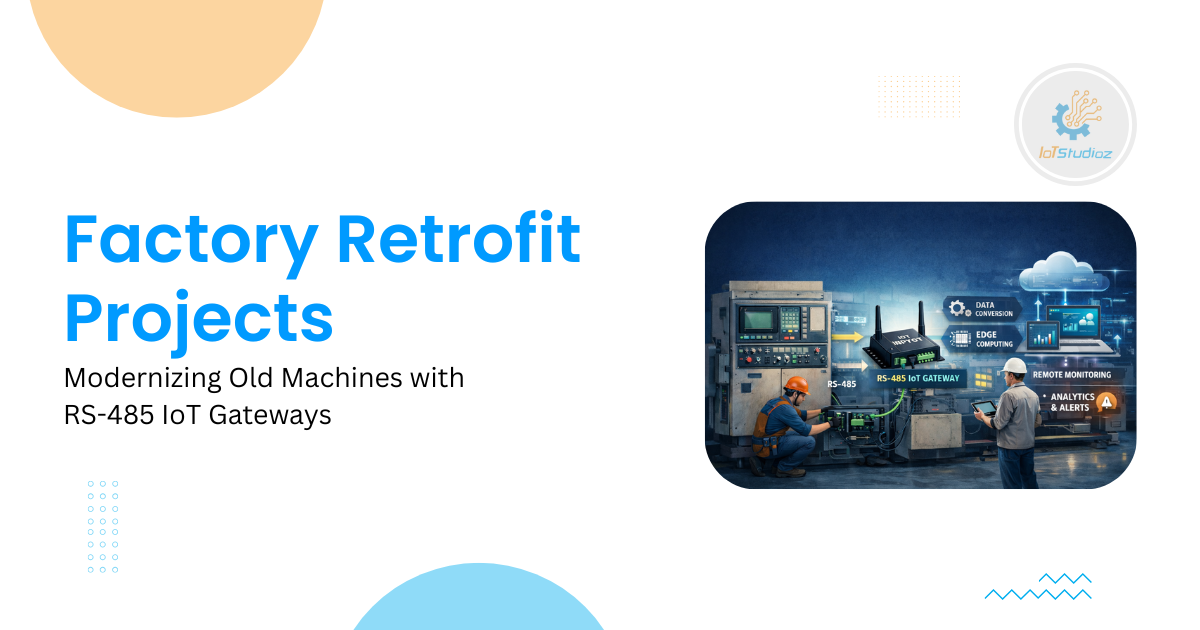
Factory Retrofit Projects: Modernizing Old Machines with RS-485 IoT Gateways
Many factories still run on machines built decades ago. These machines lack internet connectivity. They do not share data with modern software. Replacing these assets costs millions of dollars. Instead, engineers now choose factory retrofit projects. This process adds new technology to old hardware. The RS-485 IoT Gateways serve as the bridge in this transformation.
The Challenge of Legacy Equipment
Older machines use serial communication protocols. Most of these systems rely on the RS-485 standard. This standard is robust and reliable in noisy factory environments. However, it does not connect to the cloud. Data stays trapped inside the machine. Maintenance teams cannot see real-time performance. They rely on manual checks and paper logs.
This lack of data causes problems. Equipment fails without warning. Production stops unexpectedly. According to industry reports, unplanned downtime costs manufacturers roughly $50 billion every year. Older machines contribute to a large portion of this loss.
What is an RS-485 IoT Gateway?
An RS-485 IoT Gateway is a specialized device. It acts as a translator and its connects to the RS-485 port of a machine. It reads data from sensors and controllers. Then, it converts that data into modern formats like MQTT or HTTP.
These gateways send data to local servers or the cloud. They allow old machines to speak the language of the internet. This device is the core of any retrofit strategy. It enables connectivity without changing the machine’s internal logic.
The Role of the Industrial IIoT Gateway
An Industrial IIoT Gateway offers more than simple translation. It provides a secure platform for data processing. These devices often feature rugged enclosures. They withstand heat, dust, and vibration.
A high-quality Industrial IIoT Gateway handles multiple tasks:
- Data logging for long-term analysis.
- Protocol conversion for different machine brands.
- Edge computing to filter data before transmission.
- Secure encryption to protect factory secrets.
Why Retrofitting Beats Replacement
In 2026, choosing a retrofit project offers a more strategic advantage than full equipment replacement. Using an Industrial IIoT Gateway allows facilities to modernize without the high price tag of new hardware. Here is why retrofitting remains the superior choice for modern factories:
1. Drastic Cost Savings
A brand new industrial machine often costs over $200,000. In contrast, a complete retrofit with an Industrial IIoT Gateway typically costs less than $5,000. This massive difference keeps capital in the bank for other important projects.
2. Faster ROI
Most retrofit projects pay for themselves in under six months. This rapid return comes from improved uptime, better energy efficiency, and predictive maintenance. New machine purchases can take years to become profitable.
3. Minimal Downtime
Replacing large equipment requires weeks of construction, foundation work, and electrical upgrades, stopping all production. Installing an RS-485 IoT Gateways takes only a few hours of work, getting machines back online fast.
4. Preserved Durability
Many older machines were built to last with heavy, durable components. You keep that proven, rugged mechanical reliability while simply adding the modern digital connectivity they previously lacked.
5. Environmental Benefits
Retrofitting prevents tons of functional metal from entering scrap yards or landfills. Using Industrial IIoT Gateway to monitor power usage also helps the factory meet important carbon reduction and sustainability goals.
6. Custom Data Control
When you buy new equipment, you are locked into the manufacturer’s software. Retrofitting allows you to choose exactly what to monitor and how to display it, giving you total control over your production data.
How RS-485 IoT Gateways Work
RS-485 IoT Gateways serve as the vital link between legacy electrical signals and modern digital networks. These devices use a systematic process to extract and transmit data without interrupting the machine.
1. Physical Connection and Signaling
The gateway connects to the existing two-wire serial bus of the machine. It uses differential signaling to maintain data integrity even near large, noisy motors. This hardware connection is stable and permanent.
2. Protocol Translation and Polling
Most old machines speak Modbus RTU. The gateway acts as a master device, asking the machine for specific register data. It translates these raw hex codes into readable numbers like temperature or speed.
3. Data Packaging and Formatting
Once the gateway collects the raw data, it converts the information into internet-friendly formats. It typically wraps the machine data into MQTT or JSON packets, which are the standard languages for modern software.
4. Secure Wireless Transmission
After formatting the data, the Industrial IIoT Gateway sends it to the cloud or a local server. It uses encrypted Wi-Fi, Ethernet, or cellular links to ensure that sensitive production data stays protected.
5. Edge Analysis and Alarms
Before sending data, the gateway performs “edge computing” to filter out useless noise. It can trigger local alarms or shut down a machine instantly if it detects a dangerous spike in heat or vibration.
Statistical Impact of Retrofitting
Data shows that connectivity improves factory output. Factories using IIoT gateways report significant gains.
- A 12% increase in overall equipment effectiveness (OEE).
- A 30% reduction in maintenance costs through predictive alerts.
- A 20% improvement in energy efficiency by tracking idle power.
These numbers prove that small sensors make a big difference. Digital transformation does not require new machines. It requires better data access.
Steps to Implement a Retrofit Project
Successful projects follow a clear path. You must plan each stage carefully.
1. Audit Existing Hardware
Identify which machines use RS-485 ports. Check the communication protocols. Most old machines use Modbus. Some use proprietary versions.
2. Select the Right Gateway
Choose an Industrial IIoT Gateway that fits your environment. Ensure it supports your required wireless range. Verify the power supply requirements.
3. Map Data Points
Decide which data matters most. Focus on motor temperature and cycle counts. These metrics help predict failures.
4. Install and Configure
Mount the RS-485 IoT Gateways near the machines. Wire them into the serial bus. Set the baud rate and slave IDs.
5. Connect to a Dashboard
Send the data to a central platform. Use software to visualize the machine’s health. Set up alerts for abnormal readings.
Overcoming Technical Barriers
Retrofitting has some hurdles. Signal noise can corrupt data. Use shielded cables for all RS-485 connections. Ground the gateway properly to avoid electrical surges.
Security is another concern. Old machines have no built-in security. The Industrial IIoT Gateway must act as a firewall. Use gateways with VPN support. Always change default passwords during setup.
Real-World Example: A Textile Mill
A textile mill in Ohio operated 50 looms from the 1990s. The mill suffered from frequent motor burnouts. They installed RS-485 IoT Gateways on every machine. These gateways monitored current draw and heat.
The system alerted the team when a motor ran too hot. The team cleaned the filters immediately. This simple change reduced motor replacements by 40%. The mill saved $80,000 in parts within one year. They did not buy a single new loom.
The Future of the Factory Floor
By 2026, experts predict 70% of manufacturers will use some form of retrofitting. The cost of sensors continues to drop. Cloud storage is now affordable for small shops.
The RS-485 IoT Gateways make this growth possible. They prevent old machines from becoming obsolete.
Data Processing at the Edge
Modern gateways do not just send data. They think at the edge. This means the Industrial IIoT Gateway analyzes data locally. It identifies a spike in vibration instantly. It does not wait for a cloud server to reply.
Edge computing reduces bandwidth costs. It also improves response times. If a machine hits a critical heat limit, the gateway can trigger an alarm. This local intelligence prevents catastrophic damage.
Connectivity Options for Gateways
manufacturers use several methods to link an Industrial IIoT Gateway to their network. These options ensure steady data flow and easy installation across any factory environment.
1. Reliable Industrial Ethernet
This wired connection offers maximum stability and high speeds. It is the best choice for fixed machines that require low latency and protection against heavy electrical motor interference.
2. Flexible Wi-Fi 6
This wireless option allows for rapid installation without expensive cabling. It suits dynamic factory layouts where equipment moves frequently, providing strong performance even in crowded 2026 signal environments.
3. Global Cellular (5G/4G)
Cellular links are ideal for remote sites or mobile machinery. This option provides an independent data path that bypasses the local corporate IT network for better security.
4. Long-Range LoRaWAN
This low-power solution is perfect for monitoring assets across massive outdoor yards. It transmits small data packets over several miles, making it highly cost-effective for large-scale industrial facilities.
Most RS-485 IoT Gateways provide multiple connectivity modes. This versatility ensures that every machine stays connected regardless of its location or the local building infrastructure.
Improving Energy Sustainability
Retrofitting helps the planet. Old machines often waste power. They run at full speed when not needed. RS-485 IoT Gateways track energy usage per part produced.
Managers use this data to find waste. They can adjust schedules to avoid peak energy rates. Studies show that monitored machines use 15% less power on average. This lowers the carbon footprint of the factory.
Security Protocols in Gateways
protecting factory data is a top priority for every manufacturer. Modern Industrial IIoT Gateway units include multiple security layers to prevent cyber threats and unauthorized access.
1. Robust Data Encryption
Gateways use advanced protocols like TLS 1.3 to scramble data before it leaves the machine. This ensures that even if a hacker intercepts the transmission, they cannot read our private production information.
2. Encrypted VPN Tunnels
An RS-485 IoT Gateways often creates a private virtual tunnel directly to the corporate server. This keeps our machine data off the public internet, making it invisible to outside scanners and bots.
3. Strict User Authentication
Access to the gateway settings requires unique digital credentials and two-factor authentication. This prevents unauthorized personnel from changing machine parameters or stopping the data flow through a simple password breach.
4. Secure Boot Technology
The hardware includes a “root of trust” chip that verifies the software every time the device starts. This prevents malicious code or unapproved firmware from running on our factory network hardware.
5. Integrated Edge Firewalls
Modern gateways act as a protective barrier for the older machines they serve. They block all suspicious incoming traffic, protecting vulnerable legacy controllers that were never designed with built-in security features.
These features make retrofitting safe for high-security industries.
From Legacy Machines to Smart Factory Insights with RS-485 IoT Gateways
At IoTStudioz, we know that many factories rely on proven machines that lack modern connectivity. Replacing them is costly and disruptive. Our RS-485 IoT Gateways provide a practical retrofit solution that connects legacy equipment to modern digital systems. By enabling secure data collection from RS-485 and Modbus-based machines, these gateways deliver real-time visibility into machine performance, health, and production metrics. Built for industrial environments, they integrate easily with existing infrastructure and require minimal downtime during installation. The result is faster access to actionable data, improved maintenance planning, and better operational decisions without replacing your machines.
Connect with IoTStudioz today to modernize your factory with RS-485 IoT Gateways and take a confident step toward a smarter, connected production floor.

Conclusion
Upgrading a factory doesn’t mean replacing everything; it requires a strategic approach. RS-485 IoT Gateways allow cost-efficient modernization while delivering critical operational insights. The Industrial IIoT Gateway safeguards existing assets and equips facilities for the digital age, keeping them competitive in 2026 and beyond. For resources, refer to the Modbus Organization for communication standards, IoT World Today for connectivity case studies, and the International Society of Automation for factory modernization training.
Frequently Asked Questions
1. What is a factory retrofit?
A factory retrofit is the process of upgrading existing industrial machines with modern technology, sensors, or connectivity systems without replacing the entire equipment.
2. Why is retrofitting old machines important?
Retrofitting extends equipment life, improves efficiency, reduces maintenance costs, and enables data-driven decision-making in the factory.
3. What is an RS-485 IoT Gateway?
An RS-485 IoT Gateway is a device that connects industrial equipment using the RS-485 communication protocol to IoT networks, enabling data collection, monitoring, and remote control.
4. How does RS-485 communication work?
RS-485 uses differential signaling to transfer data over long distances with minimal interference, making it ideal for industrial environments.
5. Can RS-485 IoT Gateways connect to old machines?
Yes. Most industrial machines already support RS-485, Modbus, or similar protocols, making them compatible with IoT gateways for data collection.