
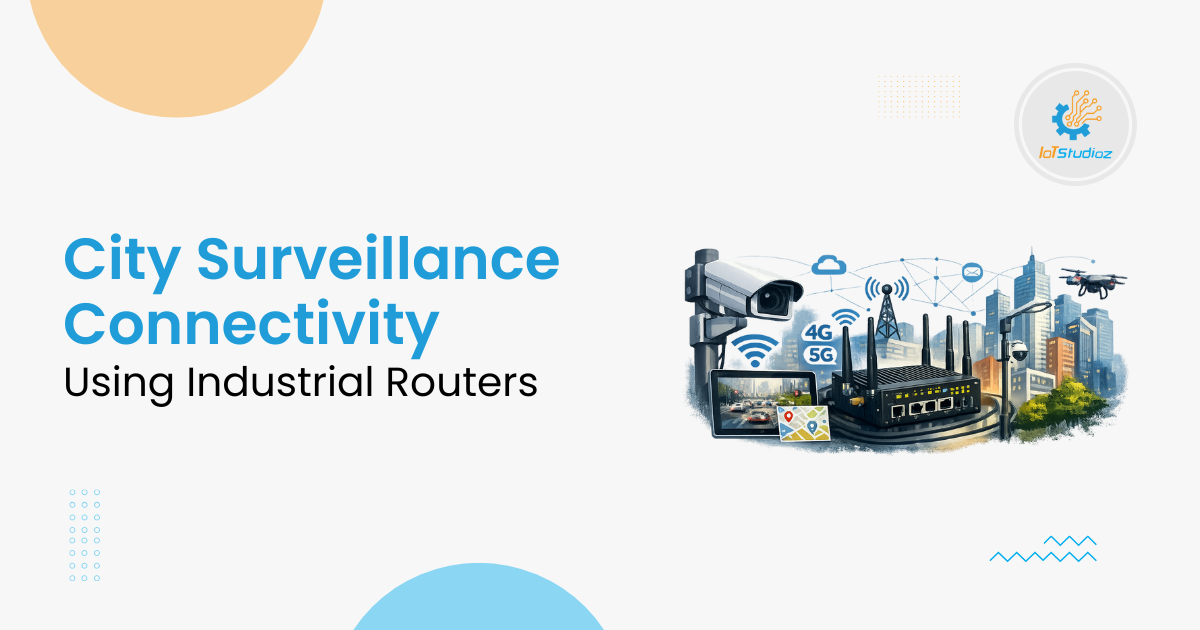
City Surveillance Connectivity Using Industrial Routers
City surveillance infrastructure sits at the heart of modern urban security and management systems. As cities grow, the demand for real-time monitoring, traffic oversight, and public safety systems rises sharply. At the core of this digital backbone are network technologies that link cameras, sensors, control centers, and analytics platforms. Among these technologies, Industrial Routers play a critical role. This comprehensive article explains how city surveillance connectivity works using industrial routers from a technical perspective. It includes market statistics, architecture insights, protocols, challenges, and real-world examples.
Introduction
Urban centers around the world deploy extensive city surveillance systems to monitor public areas, manage traffic, assist law enforcement, and improve civic services. These systems use thousands to millions of surveillance cameras and sensors. For example, global estimates indicate that there are more than one billion surveillance cameras in use by 2025.
While cameras capture data, connectivity components deliver that data to command and analytics centers. Among those, Industrial Routers ensure reliable, secure, and scalable connectivity in harsh urban environments.
Why Connectivity Matters in City Surveillance
Surveillance cameras without networking are isolated devices. Urban surveillance depends on real-time data transmission, centralized analytics, and automated responses. Connectivity enables:
- Live monitoring for control rooms
- Centralized storage and analytics across city departments
- Integration with emergency services and AI tools
- Data sharing across agencies and third-party systems
The choice of communication backbone significantly affects the performance of surveillance systems. Industrial routers become essential where reliability and uptime cannot be compromised.
What is an Industrial Router?
An Industrial Router is a specialized networking device that connects machines, sensors, and cameras in industrial or urban environments. Unlike consumer routers, industrial routers are ruggedized and designed for 24/7 operation in extreme conditions.
Key features include:
- Wide temperature range tolerance
- Protection against dust, vibration, and moisture
- Support for multiple wired and wireless protocols
- Enhanced security and firewall configurations
- Redundant communication paths
Industrial routers make surveillance networks robust and reliable, even when deployed outdoors or in remote areas.
Urban Surveillance Architecture Overview
City surveillance networks typically have layered architecture:
1. Edge Layer
This includes surveillance cameras, environmental sensors, and IoT devices deployed across roads, public spaces, and transportation hubs.
2. Connectivity Layer
Industrial routers, switches, cellular gateways, and fiber links reside here. Routers aggregate traffic from the edge and route it toward aggregation nodes or cloud services.
3. Aggregation Layer
Traffic consolidates at regional nodes or data centers. Advanced processing and storage systems handle large video feeds.
4. Application Layer
Control centers, AI analysis servers, and operator consoles use the centralized data for incident response and analytics. Industrial routers typically operate at the connectivity and aggregation layers, ensuring robust and secure data flow.
Industrial Routers in Surveillance Networks
1. Connectivity Role
Industrial routers connect hundreds of cameras and sensors to central systems. They handle:
- Traffic shaping and prioritization for video data
- Multiple network interfaces such as Ethernet, cellular (4G/5G), and Wi-Fi
- Secure VPN tunneling for encrypted data transfer
- Failover and redundancy to maintain uptime
2. Environmental Suitability
Cameras mounted on street poles or tunnels often face temperature changes, dust, and vibration. Industrial routers support:
- Extended temperature ranges (e.g., -40°C to +75°C)
- MIL-STD vibration resistance
- IP ratings (e.g., IP66 for outdoor protection)
These specs ensure consistent connectivity without frequent maintenance.
Real-World Connectivity Requirements
In a city surveillance network, connectivity must address:
1. High Bandwidth
Modern cameras produce high-definition video streams. Especially with 4K cameras, bandwidth requirements grow rapidly. Networks must transport multiple high-resolution streams without lag.
2. Low Latency
Real-time monitoring and analytics require low latency. Emergency detection and alert systems depend on near-instant feedback loops.
3. Scalability
Cities expand over time. Networks must add more devices without restructuring the existing setup. Industrial routers support modular scaling.
4. Security
Surveillance data can be sensitive. Routers enforce policies, encryption, and access controls to protect the network.
Protocols and Standards Used
Industrial routers support a range of communication protocols critical to surveillance systems:
| Protocol | Purpose |
| TCP/IP | Core communication over IP networks |
| RTSP/RTP | Video streaming delivery |
| HTTPS/VPN | Secure remote connections |
| SNMP | Network monitoring and management |
| MQTT | Lightweight IoT messaging |
These protocols ensure reliable delivery of surveillance traffic and enable remote management of devices.
Wired vs Wireless Connectivity
1. Wired Networks
Wired Ethernet and fiber optics provide stable, high-capacity links that suit dense downtown areas or fixed installations. According to market data, wired networks captured over 66% of city surveillance connectivity in 2025.
2. Wireless Networks
Wireless technologies such as 4G/5G and Wi-Fi are crucial for remote locations or temporary surveillance needs. Industrial routers often include cellular modems to provide backup or primary wireless links.
With the rise of 5G, cities can transmit high-resolution video with lower latency. This shift supports mobile applications and scalable surveillance deployments.
Network Topologies in Urban Surveillance
1. Star Topology
Each camera connects directly to an industrial router at local aggregation points. This approach simplifies management but may require more hardware.
2. Mesh Topology
Devices interconnect to form redundant paths. Industrial routers with mesh capabilities enhance reliability and backbone resilience.
3. Hybrid Topology
A mixture of star and mesh networks works well in sprawling city zones, balancing cost and redundancy.
Example Deployments
1. Large Metropolises
Cities are outfitting millions of cameras. For example, China’s mass surveillance systems have over 700 million cameras as part of urban monitoring. Industrial routers facilitate data routing in such dense networks.
2. Smart Cities
In smart city frameworks, cameras link with traffic lights, environmental sensors, and emergency systems. Urban projects connecting millions of devices rely on industrial routers for stable traffic flow and prioritization.
3. Traffic and Safety Centers
Traffic monitoring cameras send live feeds through industrial routers to control centers that manage congestion and incidents.
Industry Market Landscape
The city surveillance ecosystem is expanding rapidly. In 2024, the city surveillance market was valued at over USD 69 billion, with forecasts projecting growth to USD 186 billion by 2035 at nearly 9.5% CAGR.
This growth includes investments in connectivity infrastructure, smart analytics, and network hardware like industrial routers.
Challenges in Network Connectivity
1. Legacy Infrastructure
Older cities may rely on analog systems. Upgrading to IP-based networks requires careful planning and investment.
2. Data Security and Regulations
Privacy laws vary across regions. Proper encryption, secure access policies, and compliance with data protection regulations are essential.
3. Bandwidth Management
As camera counts increase, networks can saturate. Industrial routers use techniques such as compression and Quality of Service (QoS) rules to manage limited bandwidth.
4. Maintenance and Reliability
Outdoor environments expose hardware to failure. Industrial routers designed for harsh conditions reduce maintenance needs but still require proactive monitoring.
Best Practices for City Surveillance Connectivity
1. Use Multi-Path Connectivity
Combine wired and wireless links to ensure redundancy and reliability.
2. Segment Networks
Use VLANs and subnets to separate traffic types for performance and security.
3. Monitor Network Health
Deploy SNMP and logging tools to manage routers and devices.
4. Prioritize Video Traffic
Set QoS policies to ensure video streams get bandwidth priority over less critical traffic.
5. Regular Firmware Updates
Keep industrial routers updated to patch vulnerabilities and improve performance.
Future Trends
1. Edge Analytics
Surveillance systems will increasingly process data locally. Industrial routers with edge computing capabilities can run analytics closer to the cameras, reducing latency and bandwidth.
2. AI Integration
Connectivity will support AI systems that detect anomalies and suspicious behavior in real time.
3. Cloud and Hybrid Networks
Cloud-based video management systems will integrate with local infrastructures, and industrial routers will bridge these environments securely.
4. 5G and Beyond
High-speed cellular networks extend surveillance capabilities to mobile and remote environments.
Conclusion
City surveillance connectivity depends on robust, secure, and scalable network infrastructures. Industrial routers play a central role in enabling this connectivity. They handle high volumes of data, maintain uptime in adverse conditions, and support advanced features like VPN security, QoS, and multi-protocol communication. As cities continue to expand and adopt smart technologies, industrial routers will remain core components of surveillance ecosystems.
With the global surveillance market growing and camera counts reaching into the billions, effective network design and industrial router deployment become essential to smart city objectives, public safety, and efficient city operations.
FAQ
1: Why is an Industrial Router used in city surveillance systems?
An Industrial Router is used because city surveillance networks run 24/7. These routers handle harsh outdoor conditions. They resist heat, cold, dust, and vibration. Consumer routers cannot meet these demands. Industrial routers also support secure VPNs, redundancy, and large data loads from cameras.
2: How does an Industrial Router improve network reliability?
Industrial routers support multiple network paths. They can switch between fiber, Ethernet, and cellular links. If one link fails, another takes over. This feature reduces downtime. Studies show that network redundancy can reduce outage time by over 60% in urban networks.
3: Can Industrial Routers support high-resolution surveillance cameras?
Yes, they can. Modern surveillance cameras generate large video streams. Many Industrial Routers support Gigabit Ethernet and 5G. This allows smooth transmission of HD and 4K video. Cities now deploy over 70% IP-based cameras, which depend on strong routing hardware.
4: Are Industrial Routers secure for surveillance data?
Industrial routers include advanced security features. These include firewalls, encryption, and VPN tunnels. They protect video streams from unauthorized access. According to cybersecurity reports, encrypted networks reduce data breach risks by nearly 50% in public systems.
5: Do Industrial Routers support smart city expansion?
Yes. Industrial routers are scalable by design. Cities can add more cameras and sensors without replacing the network core. Many smart cities now connect millions of devices using modular router designs. This approach lowers long-term infrastructure costs.