
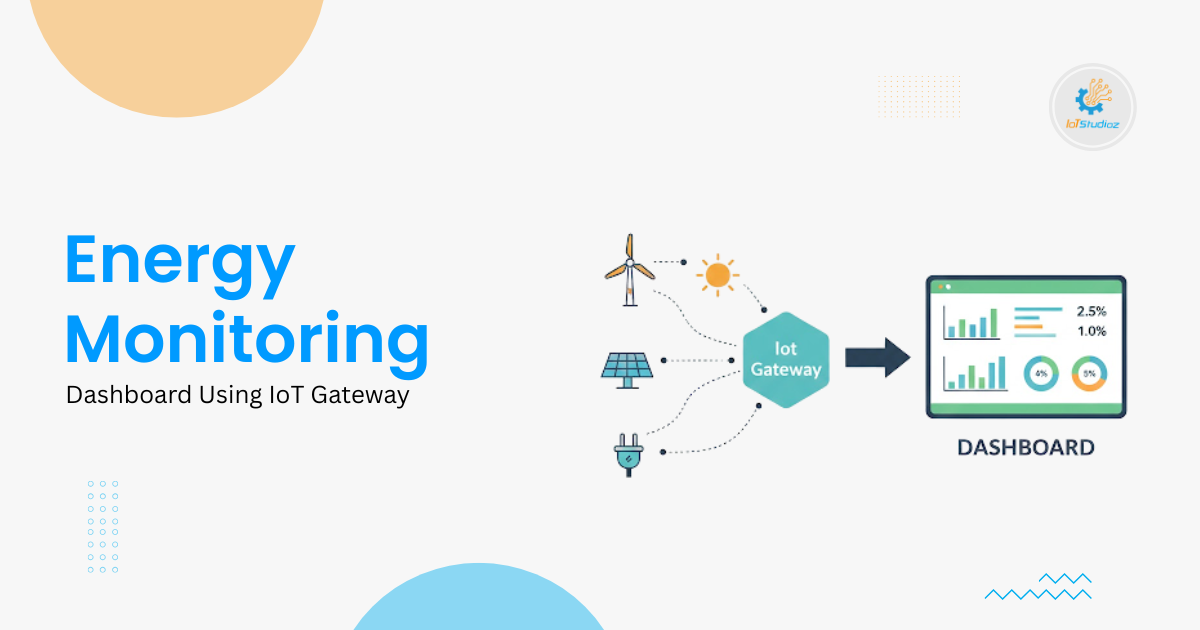
Energy Monitoring Dashboard Using IoT Gateway
Energy costs continue to rise across industries. According to the International Energy Agency, global electricity demand grew by nearly 2.5% in 2023. Industrial facilities account for almost 37% of global energy consumption. Studies from McKinsey show that real-time energy monitoring can reduce energy waste by 10% to 20%.
Traditional metering systems fail to provide live visibility. Manual readings delay decisions. This gap has increased the demand for smart monitoring solutions. An energy monitoring dashboard built using an IoT gateway addresses this challenge.
The RS-485 IoT Gateway plays a critical role in collecting field data. It connects legacy energy meters with modern platforms. An Industrial IoT Gateway ensures secure, reliable, and scalable communication. Together, these components form the backbone of industrial energy intelligence.
What Is an Energy Monitoring Dashboard
An energy monitoring dashboard is a software interface. It displays real-time and historical energy data. Engineers use it to track usage, detect issues, and analyze trends.
The dashboard aggregates data from:
- Energy meters
- Power analyzers
- Sensors
- Sub-meters
The system updates values at fixed intervals. Users view data through charts, tables, and alerts. Most dashboards support web and mobile access.
Dashboards help teams compare energy use across machines, shifts, and locations. This visibility supports informed decisions and operational control.
Why Energy Monitoring Matters in Industry
Energy forms a major operating cost. In manufacturing, energy can represent up to 30% of total expenses. Poor visibility leads to waste and equipment stress.
Key challenges include:
- Peak demand charges: High power draw during short intervals increases utility costs and impacts operating budgets.
- Power quality issues: Voltage fluctuations and electrical noise can disrupt sensitive equipment and cause system faults.
- Equipment inefficiency: Aging or poorly tuned machines consume more energy and deliver inconsistent performance.
- Manual reporting delays: Human-dependent data collection slows decision-making and reduces response accuracy.
Energy monitoring systems solve these problems. They provide live feedback. They also support compliance with energy standards such as ISO 50001.
With real-time data, teams respond faster. They prevent failures and reduce unnecessary consumption.
Role of IoT Gateway in Energy Monitoring
The IoT gateway acts as a bridge. It connects field devices to cloud or local servers. Energy meters often use serial communication. Modern dashboards require IP-based data.
The gateway performs several functions:
- Data acquisition: It collects raw data from sensors, meters, and field devices in real time.
- Protocol conversion: It translates industrial protocols into formats suitable for IT and cloud systems.
- Edge processing: It filters, aggregates, or analyzes data locally to reduce latency and bandwidth use.
- Secure transmission: It sends data to central systems using encrypted and authenticated communication channels.
Understanding RS-485 Communication
RS-485 is a widely used industrial standard, and it supports long-distance communication while handling noisy environments well. Key features include multi-drop capability, cable length up to 1200 meters, and high noise immunity. Most energy meters support RS-485 with Modbus RTU protocol. This makes RS-485 ideal for industrial energy monitoring systems.
RS-485 IoT Gateway in Energy Monitoring
The RS-485 IoT Gateway connects multiple meters to a central system. It polls data from each device. It converts serial data into Ethernet or wireless formats.
Common capabilities include Modbus RTU to Modbus TCP conversion, MQTT and HTTP support, and device addressing and scheduling. The gateway reduces wiring complexity. It also supports legacy equipment without upgrades.In large plants, one gateway can serve dozens of meters. This reduces hardware cost and maintenance effort.
Industrial IoT Gateway Architecture
An Industrial IoT Gateway uses rugged hardware. It operates reliably in harsh environments.
Typical components include serial ports such as RS-485 and RS-232, an Ethernet interface, a cellular or Wi-Fi module, and an embedded processor.
The gateway runs a lightweight operating system. It handles data buffering and filtering. It also manages network interruptions. This architecture ensures stable data flow from the shop floor to the dashboard.
Data Flow in Energy Monitoring System
Understanding data flow helps with system design. The process follows these steps: energy meters measure electrical parameters, the RS-485 IoT Gateway polls meter registers, the gateway formats data into packets, data moves to the server or cloud, and the dashboard visualizes and stores the data.
This flow supports real-time updates. It also enables historical analysis. Edge processing at the gateway reduces bandwidth usage. Only relevant data gets transmitted.
Energy Parameters Captured
Energy monitoring dashboards track multiple parameters. Common metrics include voltage, current, active power, reactive power, power factor, frequency, and energy consumption in kilowatt-hours. Advanced meters also provide harmonic distortion, phase imbalance, and demand values.
Dashboard Design and Visualization
Dashboard design affects usability, and clear visuals support quick decisions. Most dashboards include line charts for trends, bar charts for comparisons, gauges for live values, and tables for detailed logs. Users filter data by time, device, or location, while color-coded alerts highlight abnormal conditions. Simple layouts reduce training effort, so engineers focus on data, not navigation.
Real-Time Alerts and Notifications
Alerts improve response time, and the system triggers alerts when values exceed limits. Examples include overvoltage, high demand peaks, and low power factor. Alerts can reach users through email, SMS, and mobile notifications. The gateway or server defines alert rules, and quick alerts prevent equipment damage and cost overruns.
Edge Processing at the Gateway
Edge processing adds intelligence near the source. The gateway processes data before sending it. Common edge functions include:
- Data filtering
- Threshold checks
- Local storage
This approach reduces latency. It also supports operation during network outages. When connectivity resumes, the gateway syncs stored data. No information gets lost.
Security in Energy Monitoring Systems
Energy data is sensitive, and unauthorized access can cause serious issues. Security measures include device authentication, encrypted communication, and role-based access. Industrial IoT gateways often support TLS and VPN, and these features protect data during transmission. Regular firmware updates also reduce risk, while secure systems build trust and compliance.
Scalability of IoT-Based Dashboards
Industrial sites grow over time, and monitoring systems must scale easily. IoT gateways support scalability through multi-device connectivity, modular architecture, and cloud integration. Adding new meters requires minimal changes, and the dashboard updates automatically. This flexibility supports multi-site energy management.
Cloud vs On-Premise Deployment
Energy dashboards can run on cloud or local servers. Cloud deployment offers remote access, easy scaling, and lower infrastructure cost. On-premise deployment offers data control, low latency, and offline operation. Many industries use hybrid models, and the Industrial IoT Gateway supports both options.
Practical Example: Manufacturing Plant
A medium-sized factory installed an energy monitoring system, and it used RS-485 meters on each production line. An RS-485 IoT Gateway collected data, and the gateway sent data to a cloud dashboard. Results after six months included a 15% reduction in energy cost, improved power factor, and faster fault detection. The team identified idle machines consuming power, and they adjusted schedules based on data.
Maintenance and Reliability
Industrial environments demand reliability, and gateways must operate continuously. Key reliability features include industrial-grade components, watchdog timers, and data buffering. Regular maintenance includes firmware updates, communication checks, and device health monitoring.
Future Trends in Energy Monitoring
Energy monitoring continues to evolve.
Emerging trends include:
- AI-based energy analytics: Algorithms analyze consumption patterns to detect anomalies and optimization opportunities.
- Predictive maintenance: Historical and real-time data help forecast equipment issues before failures occur.
- Integration with energy management systems: Gateways and dashboards connect with centralized platforms to support coordinated energy planning and reporting.
IoT gateways will support more protocols. Dashboards will provide deeper insights. Real-time energy intelligence will become standard.
Conclusion
Energy monitoring dashboards play a critical role in modern industry. They provide visibility, control, and insight. The RS-485 IoT Gateway connects legacy meters with modern platforms. The Industrial IoT Gateway ensures secure and reliable data flow.
Together, they enable accurate energy monitoring. They support cost reduction and operational efficiency.
As energy demands grow, such systems will remain essential. Data-driven energy management will define future industrial success.
Frequently Asked Questions
1. What is an IoT Gateway in energy monitoring?
An IoT Gateway connects energy meters and sensors to the cloud, collects and preprocesses data, and ensures secure transmission, enabling seamless integration with dashboards for real-time monitoring and efficient energy management.
2. How does the dashboard provide real-time insights?
The dashboard receives continuous data from the IoT Gateway, visualizing live power usage, voltage fluctuations, and device-level consumption, allowing instant detection of anomalies and enabling near real-time operational decisions.
3. How often does the IoT Gateway update data?
IoT Gateways typically transmit data at intervals ranging from seconds to minutes. Update frequency can be customized based on criticality, allowing real-time monitoring for urgent alerts or aggregated updates for long-term trend analysis.
4. How reliable is data transmission in IoT energy monitoring?
Data reliability depends on the IoT Gateway’s connectivity protocols (Wi-Fi, Ethernet, LoRaWAN, or cellular) and network redundancy. Gateways often store data locally during outages, ensuring no loss before transmission resumes.
5. How does the IoT Gateway collect energy data from multiple devices?
The IoT Gateway connects to meters and sensors via various protocols, aggregates readings, preprocesses them, and sends secure, structured data to the dashboard, enabling centralized, real-time monitoring of energy consumption across all devices.