
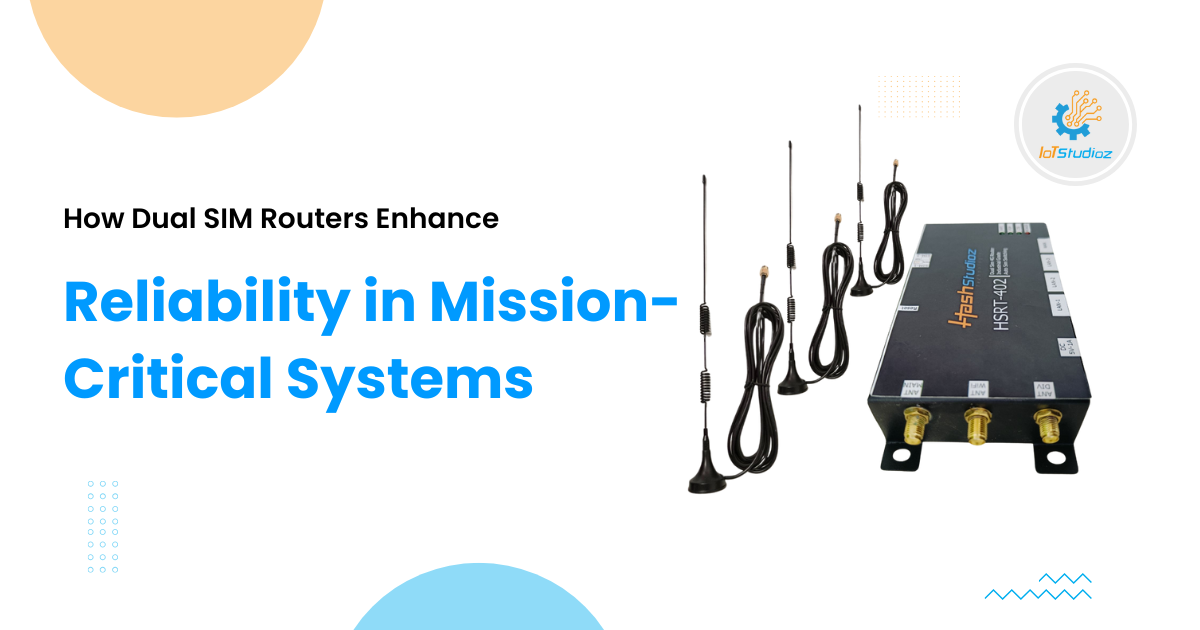
How Dual SIM Routers Enhance Reliability in Mission-Critical Systems Leave a comment
Mission-critical systems depend on constant communication to operate safely and accurately. Studies show that over 80% of industrial system failures are linked to network issues, and even brief disruptions can stop operations, delay alarms, or create serious safety risks. In industries such as manufacturing, energy, and utilities, unplanned downtime costs range between USD 5,000 and USD 50,000 per minute, making reliable connectivity essential.
A Dual SIM Industrial Router improves reliability by connecting to two independent cellular networks, reducing single points of failure. Network redundancy can cut communication downtime by up to 80%, helping systems achieve uptime levels close to 99.99%. A Dual SIM 4G LTE Industrial Router further enhances performance by delivering high-speed data rates of up to 150 Mbps, wider coverage, and stable connectivity, even in demanding industrial environments.
Why Reliability Matters in Mission-Critical Systems
Mission-critical systems operate in environments where failures can cause safety hazards, production losses, or service outages. Reliable connectivity ensures these systems perform consistently and support real-time decision-making without interruption.
1. Continuous Operational Control
Mission-critical systems control machines, processes, and infrastructure continuously. Reliable networks ensure commands, feedback signals, and status updates flow without delay, preventing production stoppages and maintaining stable system behavior.
2. Safety and Risk Prevention
Many mission-critical systems monitor safety conditions. Reliable connectivity ensures alarms, emergency shutdown signals, and alerts reach operators immediately, reducing accident risks and protecting personnel, equipment, and surrounding environments.
3. Financial Impact of Downtime
Industrial downtime is expensive. Studies estimate losses between USD 5,000 and USD 50,000 per minute. Reliable networks reduce outages, helping organizations avoid revenue loss and unexpected recovery costs.
4. Real-Time Decision Accuracy
Operational decisions rely on accurate, real-time data. Network interruptions delay or distort data delivery, leading to incorrect decisions. Reliable connectivity ensures consistent data flow for timely and informed actions.
5. System Availability Requirements
Industries often target 99.99% uptime or higher. This allows less than one hour of downtime annually. Reliable networks are essential to meet these strict availability requirements.
6. Regulatory and Compliance Needs
Many industries must meet regulatory standards for system availability and reporting. Network failures can lead to non-compliance, penalties, and audits. Reliable connectivity supports continuous compliance and reporting accuracy.
Limitations of Single SIM Connectivity
Single SIM connectivity creates several technical and operational risks in mission-critical systems. Each limitation increases the chance of downtime, data loss, or delayed response during network disruptions.
- Single Point of Network Failure: A single SIM router relies on one cellular carrier. When that network fails due to congestion or outages, the entire system loses connectivity without any automatic backup option.
- Impact of Network Congestion: Cellular networks often face congestion during peak usage. Single SIM routers cannot shift traffic, leading to higher latency, packet loss, and delayed data delivery in critical industrial systems.
- Scheduled Maintenance Downtime: Cellular operators perform routine maintenance. During these periods, single SIM routers may experience service interruption, causing unexpected downtime in systems that require continuous communication.
- Limited Geographic Coverage: Coverage strength varies by region. A single carrier may provide weak signal in rural or industrial zones, resulting in unstable connections and frequent communication drops.
- Poor Performance in Remote Locations: Remote sites often have limited cellular infrastructure. Single SIM routers struggle in such areas, increasing the risk of long outages and reduced system visibility.
What Is a Dual SIM Industrial Router
A Dual SIM Industrial Router contains two SIM slots connected to independent cellular networks. The router manages both connections automatically to maintain uninterrupted communication during network degradation or failure.
A Dual SIM 4G LTE Industrial Router supports high-speed LTE communication while maintaining redundancy. It combines industrial durability with advanced failover logic for continuous operation in harsh environments.
How Dual SIM Routers Improve Network Reliability
Dual SIM routers increase network stability by introducing redundancy, intelligent switching, and continuous link monitoring. These capabilities ensure mission-critical systems remain connected during network disruptions.
- Network Redundancy: Dual SIM routers remove single points of failure by using two independent cellular networks. When one network becomes unavailable, traffic shifts instantly, maintaining uninterrupted data exchange and control communication.
- Automatic Failover: The router continuously monitors network health through latency, packet loss, and signal quality checks. When performance degrades, it switches to the secondary SIM within milliseconds, preventing communication loss.
- Continuous Connectivity: Mission-critical systems require constant data flow. Dual SIM routers maintain active communication paths, ensuring monitoring data, alarms, and automated controls operate without interruption during network instability.
Technical Architecture of Dual SIM Routers
The technical design of dual SIM routers focuses on intelligent decision-making, robust cellular hardware, and continuous performance evaluation to maintain stable connectivity in mission-critical environments.
1. SIM Switching Logic
The router uses built-in logic to control SIM selection. It applies priority rules, signal thresholds, and latency checks to select the most stable network at any moment.
2. Cellular Modem Design
Industrial routers use high-grade LTE modems with multi-band support. These modems provide consistent performance in weak signal areas, ensuring reliable communication in industrial and remote deployments.
3. Network Health Monitoring
The router performs continuous health checks on active links. These checks rely on real performance metrics, reducing false failovers and maintaining stable sessions during short-term signal variations.
Industrial-Grade Design Benefits
Industrial-grade routers are engineered to deliver consistent performance in demanding environments. Their design supports long-term reliability, making them suitable for mission-critical deployments.
1. Operation in Extreme Conditions
Industrial routers function reliably in harsh environments. They support wide temperature ranges, resist vibration, and tolerate electrical noise, ensuring stable connectivity where consumer devices fail quickly.
2. Long-Term Hardware Stability
Mission-critical systems require long service life. Industrial routers offer extended product availability, long-term firmware support, and consistent performance across many years of continuous operation.
Applications in Mission-Critical Industries
- Manufacturing and Automation: Factories rely on real-time machine data and control signals. Dual SIM routers prevent production stops caused by network failures, supporting stable SCADA and industrial IoT communications.
- Energy and Utilities: Power and water systems depend on remote monitoring. Dual SIM routers maintain connectivity to substations and field devices, ensuring continuous visibility during cellular network outages.
- Transportation and Logistics: Fleet tracking and traffic systems require uninterrupted connectivity. Dual SIM routers reduce service disruptions caused by coverage gaps along highways, rail routes, and remote transport corridors.
- Oil, Gas, and Mining: Remote industrial sites lack wired infrastructure. Dual SIM 4G LTE Industrial Routers provide reliable communication using multiple cellular carriers in isolated and harsh environments.
Security During Failover
Security remains a critical requirement during network transitions in mission-critical systems. Dual SIM routers maintain protection measures even while switching between cellular networks.
1. Continuous Security Protection
Failover does not weaken security controls. VPN tunnels, firewalls, and encrypted sessions remain active during SIM switching, ensuring data integrity and compliance with industrial security standards.
2. Reduced Human Error
Automatic failover limits manual intervention during network failures. This reduces configuration mistakes, shortens response time, and maintains secure communication throughout connectivity disruptions.
Industry Statistics Supporting Dual SIM Use
Industry data clearly shows the importance of redundant connectivity for maintaining reliable operations in mission-critical environments.
1. High Availability Requirements
Industrial networks often target 99.99% uptime, which allows less than 53 minutes of downtime per year. Dual SIM redundancy helps meet these targets by minimizing connectivity interruptions.
2. Proven Reduction in Downtime
Studies indicate that redundant cellular connectivity can reduce cellular-related downtime by more than 80%, significantly improving system reliability and operational continuity.
3. Growing Adoption Across Industries
More than 70% of industrial IoT deployments now use cellular connectivity with redundancy. This trend reflects increasing demand for resilient, always-connected communication systems.
Best Practices for Dual SIM Deployment
Proper deployment practices ensure dual SIM routers deliver maximum reliability and stable performance in mission-critical environments.
1. Use Carrier Diversity
Select SIM cards from different network operators. This approach reduces the risk of simultaneous outages and improves connectivity reliability across varying geographic and network conditions.
2. Configure Failover Thresholds Carefully
Set balanced failover thresholds based on latency, packet loss, and signal quality. Proper tuning prevents frequent switching while ensuring fast response during genuine network degradation.
3. Monitor Network Performance Continuously
Use remote monitoring tools to track link performance. Continuous monitoring helps detect issues early, analyze trends, and maintain long-term network stability and availability.
Advantages Over Wired Backup Solutions
Dual SIM cellular connectivity provides practical benefits over traditional wired backup links, especially in industrial and remote deployments where flexibility and speed matter.
1. Faster Deployment and Lower Cost
Wired backup links require trenching, cabling, and permits, increasing cost and deployment time. Dual SIM cellular solutions install quickly and reduce infrastructure expenses significantly.
2. Greater Flexibility for Remote Sites
Many industrial locations lack wired infrastructure. Dual SIM cellular routers operate independently of fixed lines, making them ideal for remote, mobile, and temporary installations.
3. Improved Availability in Critical Systems
Cellular redundancy enables automatic failover between networks. For many industrial sites, this approach is the most effective way to achieve high availability and continuous connectivity.
Achieve Unmatched Reliability for Your Mission-Critical Systems with Dual SIM Routers
At IoTStudioz, we understand the importance of continuous, reliable communication in mission-critical environments. Our Dual SIM routers provide the failover, redundancy, and high-speed connectivity your systems need to avoid costly downtime and ensure constant operational control.
With robust performance even in the most challenging industrial environments, our solutions empower industries like manufacturing, energy, and transportation to maintain 24/7 connectivity. Secure, resilient, and scalable—our Dual SIM routers keep your mission-critical systems running without interruption.
Get in touch with IoTStudioz today and discover how we can help you safeguard your operations with reliable, always-on connectivity.
Conclusion
Mission-critical systems demand constant connectivity. A Dual SIM Industrial Router provides network redundancy that reduces downtime and protects operations. A Dual SIM 4G LTE Industrial Router adds speed, coverage, and durability.
These routers support reliable communication across industries such as manufacturing, energy, transportation, and remote monitoring. Dual SIM connectivity has become a foundational element in modern mission-critical network design.
Frequently Asked Questions (FAQs)
1. What is a Dual SIM router in mission-critical systems?
A Dual SIM router uses two cellular networks to provide redundancy, ensuring continuous connectivity when one network fails or degrades.
2. How does a Dual SIM router improve system reliability?
It removes single points of failure by enabling automatic failover between networks, reducing downtime and maintaining continuous data communication.
3. Why are Dual SIM routers preferred over single SIM routers in industrial use?
Single SIM routers depend on one carrier. Dual SIM routers offer carrier diversity, higher availability, and better performance in unstable or remote network conditions.
4. How fast is the failover process in Dual SIM routers?
Failover typically occurs within milliseconds, allowing critical data, alarms, and control signals to continue without noticeable interruption.
5. Are Dual SIM routers secure during network switching?
Yes. Industrial Dual SIM routers maintain VPNs, firewalls, and encrypted connections during failover, ensuring secure data transmission at all times.
6. Which industries benefit most from Dual SIM routers?
Manufacturing, energy, utilities, transportation, oil and gas, and remote monitoring industries benefit due to their need for continuous and reliable connectivity.
7. Can Dual SIM routers help achieve high uptime targets?
Yes. Dual SIM redundancy supports uptime levels close to 99.99%, significantly reducing network-related downtime in mission-critical environments.