
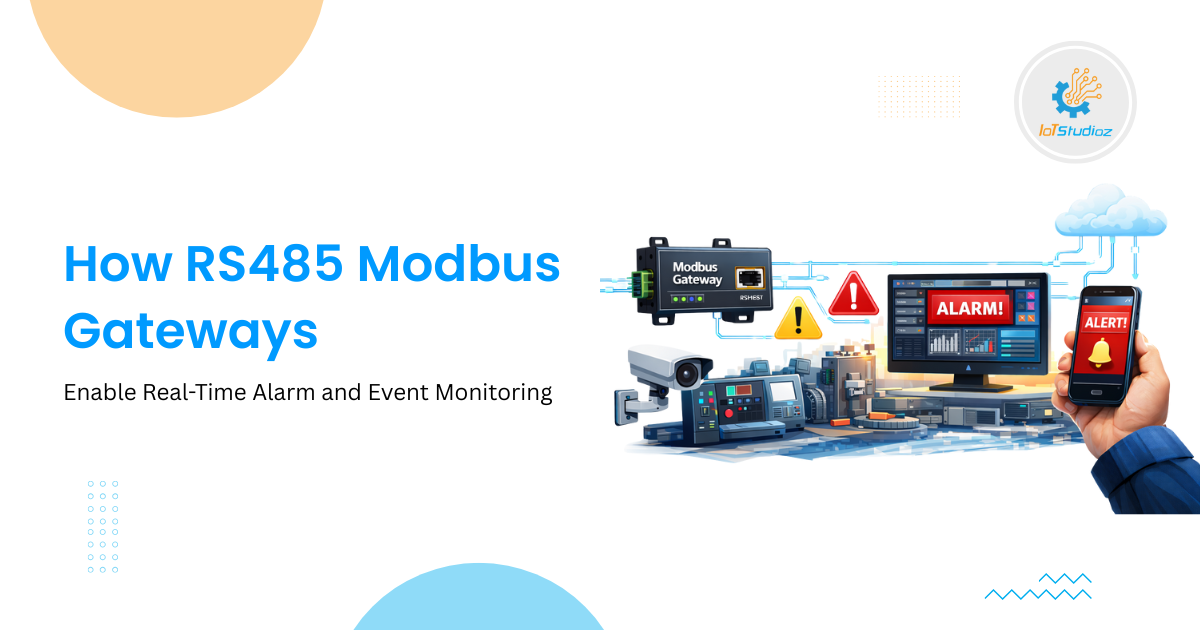
How RS485 Modbus Gateways Enable Real-Time Alarm and Event Monitoring
Modern industrial systems rely on continuous monitoring to maintain operational efficiency and safety. Many facilities still use RS485-connected devices, such as PLCs, sensors, and meters. While these devices communicate effectively via the Modbus protocol, they are limited in reporting alarms and events in real time to centralized systems. RS485 Modbus Gateways address this limitation by converting serial data into IP-based communication. When combined with Industrial IoT Gateway capabilities, they enable fast, reliable monitoring and integration with modern industrial networks.
What Is an RS485 Modbus Gateway?
An RS485 Modbus Gateway is an industrial communication device that bridges traditional serial-based equipment with modern IP-based networks. Specifically, it connects field devices using the RS485 physical layer and the Modbus RTU protocol to Ethernet or Internet-enabled systems. RS485 is commonly used in industrial environments because it supports long-distance communication, provides high noise immunity, and allows multiple devices to share a single bus.
Why Real-Time Alarm and Event Monitoring Matters
Real-time alarm and event monitoring is crucial because it allows immediate detection of equipment faults, safety hazards, or operational anomalies, reducing downtime, preventing damage, and enabling faster, informed decision-making.
1. High Volume of Industrial Data
Industrial devices continuously generate large volumes of operational data. Within this data, alarms and events highlight abnormal conditions that require immediate attention to prevent system instability or failure.
2. Detection of Critical Conditions
Real-time monitoring helps instantly identify critical conditions such as equipment overheating, pressure thresholds being exceeded, abnormal vibrations, power failures, and safety or security incidents within industrial processes.
3. Prevention of Equipment Damage
When alarms are detected immediately, corrective actions can be taken before conditions worsen. This prevents permanent equipment damage, extends asset life, and reduces costly repair or replacement expenses.
4. Reduction of Production Downtime
Delayed detection of anomalies often leads to unplanned shutdowns. Real-time alarm monitoring minimizes downtime by enabling faster troubleshooting and maintenance, keeping production lines running efficiently.
5. Improved Safety and Risk Management
Timely alerts help protect workers and facilities by identifying hazardous situations early. This reduces the risk of accidents, environmental damage, and violations of safety regulations.
According to industry reports, over 40% of industrial downtime is caused by delayed detection of anomalies. Real-time monitoring minimizes response time and reduces the impact of failures.
How RS485 Modbus Gateways Work
RS485 Modbus Gateways connect RS485 devices using Modbus RTU to Ethernet or IP networks. They poll sensors and controllers, convert serial data into protocols like Modbus TCP or MQTT, and transmit it to monitoring systems. Many gateways also process alarms locally, enabling instant detection and reporting, while ensuring secure, reliable communication for real-time monitoring.
1. Serial-to-IP Conversion
RS485 devices communicate using Modbus RTU, which is limited to serial connections. The gateway polls these devices and converts their data into IP-based messages. This allows monitoring systems, SCADA platforms, and cloud applications to access real-time device information.
2. Protocol Translation
RS485 Modbus Gateways map device registers to structured data formats, which enables seamless integration with modern systems. For example, a temperature sensor’s high-temperature alarm in Modbus RTU can be converted into an MQTT alert, while a flow meter detecting an abnormal rate can send HTTP notifications to a cloud platform. This process allows real-time monitoring, analytics, and automated alerting across industrial networks.
3. Edge Processing
Some gateways process alarms locally, detecting threshold breaches before transmitting data to a central server. This approach ensures that alarms are reported immediately, even when network connectivity fluctuates.
Architecture of Real-Time Monitoring
RS485 Modbus Gateways provide real-time alarm monitoring, giving operators fast, reliable visibility of industrial devices and processes. Multiple interconnected layers work together to detect and report alarms and events immediately.
1. Field Devices
Field devices, including sensors, meters, and PLCs, communicate over RS485 using the Modbus RTU protocol. They measure physical parameters such as temperature, pressure, and flow, and generate alarms or events whenever readings exceed predefined thresholds, thus enabling continuous process monitoring.
2. RS485 Modbus Gateway
The RS485 Modbus Gateway collects data from serial devices and converts it into Ethernet-compatible protocols such as Modbus TCP, MQTT, or HTTP. Additionally, it can detect alarms locally, ensuring real-time event reporting even when temporary network disruptions occur.
3. Industrial Network
Converted data travels over the industrial network, which may include Ethernet, Wi-Fi, or cellular connections. This network allows multiple RS485 devices across different locations to communicate with central monitoring platforms efficiently, securely, and in real time.
4. Monitoring Platform
The monitoring platform, including SCADA, MES, or cloud dashboards, receives the converted data and visualizes device status, logs alarms, and tracks historical trends. This functionality enables operators to analyze events, respond quickly, and make more informed operational decisions.
5. Alerting System
The alerting system notifies operators of critical events via SMS, email, push notifications, or mobile apps. Operators can prioritize alerts by severity or location, which ensures immediate responses, reduces downtime, and prevents potential equipment damage or safety hazards.
Advantages of Using RS485 Modbus Gateways for Real-Time Monitoring
1. Increased Responsiveness
RS485 Modbus Gateways reduce delays from sequential device polling. They support high-frequency polling and event-driven updates, allowing operators to detect and report alarms rapidly, ensuring critical issues are addressed without delay
2. Centralized Visibility
Integrating RS485 devices into Ethernet networks allows operators to monitor multiple sites through a single dashboard. This centralized view improves situational awareness, accelerates decision-making, and optimizes the allocation of personnel and resources across operations.
3. Flexible Protocol Support
Gateways convert Modbus RTU into multiple protocols, including Modbus TCP, MQTT, and REST APIs. This versatility allows seamless integration with SCADA systems, Industrial IoT platforms, and cloud-based analytics tools, thereby enabling comprehensive monitoring and control.
4. Edge Intelligence
Many RS485 Modbus Gateways include local processing capabilities that detect threshold breaches instantly. It therefore ensures alarms trigger immediately, even if network interruptions occur, thus reducing reliance on central servers and enhancing the reliability of real-time monitoring.
Practical Use Cases
1. Manufacturing
In automated production lines, sensors on motors, conveyors, and machines detect conditions like motor overload, high vibration, or temperature spikes. RS485 Modbus Gateways transmit these alarms in real time to SCADA systems, enabling immediate corrective action and minimizing downtime.
2. Utilities
Water, gas, and electricity distribution networks rely on hundreds of remote sensors and meters. Gateways convert RS485 data to IP-based protocols, allowing centralized monitoring and fast response to leaks, pump failures, abnormal pressures, or other operational anomalies.
3. Building Automation
Water, gas, and electricity distribution networks rely on hundreds of remote sensors and meters. Gateways convert RS485 data to IP-based protocols, allowing centralized monitoring and fast response to leaks, pump failures, abnormal pressures, or other operational anomalies.
Technical Considerations
1. Polling and Reporting Frequency
High-frequency polling improves the responsiveness of RS485 Modbus Gateways, allowing alarms and events to be detected quickly. However, excessive polling can overload the network. Gateways balance scheduled polling with event-driven updates to ensure efficient, real-time monitoring without congestion.
2. Latency
Modern RS485 Modbus Gateways introduce minimal communication delay. For most industrial applications, end-to-end latency remains below 500 milliseconds, which is sufficient for real-time alarm detection and event monitoring, ensuring operators can respond promptly to critical conditions.
3. Security
Industrial IoT Gateways incorporate encryption protocols such as TLS/SSL and user authentication mechanisms. These features protect alarm and event data as it transmits over Ethernet, Wi-Fi, or cellular networks, preventing unauthorized access and maintaining data integrity.
Quantifiable Benefits
1. Reduced Downtime
Real-time monitoring with RS485 Modbus Gateways ensures that alarms and events are detected immediately. This allows operators to respond promptly, preventing extended equipment downtime, minimizing production interruptions, and maintaining continuous industrial operations.
2. Cost Savings
Early detection of anomalies and equipment faults significantly reduces the likelihood of severe damage or failures. By addressing issues proactively, organizations can save on repair costs, replacement parts, and potential revenue losses caused by unplanned production stoppages.
3. Scalability
RS485 Modbus Gateways enable hundreds of field devices to connect to a single Ethernet network. This simplifies integration, allows centralized monitoring across multiple sites, and supports future expansion without significant changes to existing infrastructure.
4. Improved Safety
Immediate detection and notification of critical events, such as high temperatures, pressure spikes, or security breaches, protect both personnel and equipment. In addition, real-time alerts reduce operational risks and help ensure compliance with safety regulations and industry standards.
Future Trends
The Industrial IoT market is expanding rapidly, driven by the growing need for real-time monitoring across industrial operations. Moreover, edge-enabled gateways, 5G connectivity, and cloud integration are making real-time alarm monitoring more reliable and scalable. As a result, the trend toward predictive maintenance relies heavily on gateways that can process data locally while efficiently transmitting it to central systems.

Conclusion
RS485 Modbus Gateways, especially when integrated with Industrial IoT Gateway capabilities, play a crucial role in real-time alarm and event monitoring within industrial networks. They enable fast and reliable alarm reporting, convert legacy RS485 data into modern IT protocols, support edge processing for immediate responses, and provide scalable connectivity across extensive systems. By bridging serial devices with Ethernet and IP networks, these gateways allow operators to respond quickly to critical events, minimize downtime, and maintain safer, more efficient industrial operations..
Frequently Asked Questions
1. What is an RS485 Modbus Gateway, and why is it used in industrial monitoring?
An RS485 Modbus Gateway connects RS485 devices using Modbus RTU to Ethernet or IP networks. It enables real-time monitoring of alarms and events by converting serial data into network-compatible protocols like Modbus TCP or MQTT.
2. How do RS485 Modbus Gateways support real-time alarm detection?
Gateways poll field devices at high frequency and can detect threshold breaches locally through edge processing. This ensures alarms are generated and transmitted immediately, minimizing response time and preventing downtime.
3. What types of industrial alarms can be monitored using these gateways?
Operators can monitor alarms from temperature, pressure, flow, vibration, and security sensors. The system also tracks equipment failures and abnormal conditions, sending instant notifications so corrective actions can be taken immediately.
4. How do RS485 Modbus Gateways improve operational efficiency?
By enabling fast alarm reporting, centralized monitoring, and scalable connectivity, gateways reduce downtime, prevent equipment damage, and allow operators to respond quickly to critical events across multiple sites.
5. Are RS485 Modbus Gateways secure for transmitting alarm data?
Modern gateways include encryption protocols, authentication, and secure communication over Ethernet or cellular networks, ensuring alarm and event data is protected from unauthorized access and tampering.
6. What industries benefit most from real-time monitoring using RS485 Modbus Gateways?
Manufacturers, utility operators, building managers, and energy system controllers widely use them in factories and smart facilities, detecting alarms and events immediately to ensure safety and operational efficiency.