
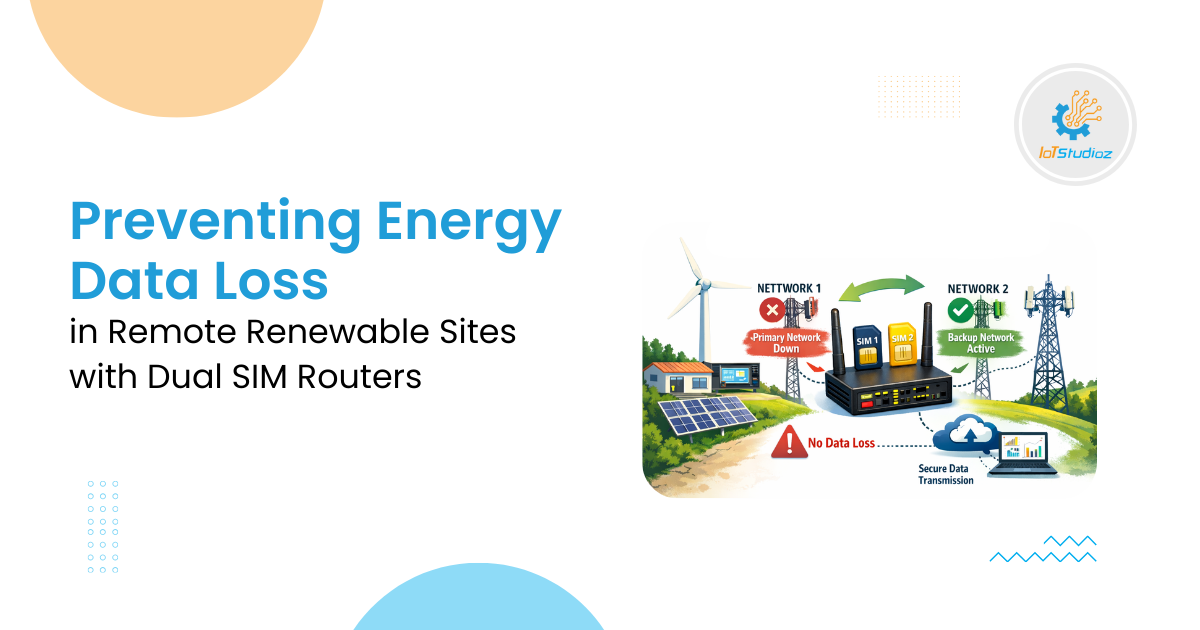
Preventing Energy Data Loss in Remote Renewable Sites with Dual SIM Routers
In the modern energy landscape, renewable sites like solar farms and wind parks play an essential role in reducing carbon emissions and meeting global energy demand. These facilities generate vast streams of operational data. Operators use this data to monitor performance, predict failures, adjust output, and maintain safety. When data stops flowing, visibility fades. This loss directly impacts energy production, operational costs, and safety. Reliable communication systems are vital for continuous data transmission, especially at remote locations. Dual SIM Industrial Router and Dual SIM 4G LTE Industrial Router technologies form a critical foundation for maintaining uninterrupted connectivity in these challenging environments.
This article offers an in-depth technical perspective on preventing energy data loss in remote renewable sites using dual SIM router solutions. We cover communication challenges, solutions, architecture, real-world examples, and best practices.
Why Remote Connectivity Matters for Renewable Energy
Remote renewable sites rely heavily on real‑time data. Sensors, inverters, controllers, and energy storage systems continuously transmit data to control centers or cloud platforms. This data enables:
- Performance analysis and optimization
- Predictive maintenance
- Fault detection and safety alarms
- Regulatory reporting
- Grid grid‑balancing decisions
Without reliable connectivity, operators lose visibility into site performance. Data gaps can mask failing equipment, misrepresent energy output, and lead to financial losses. Industry analysis shows that many remote monitoring systems record incomplete or inconsistent datasets. Up to 75% of monitoring portals log insufficient high‑frequency data from inverters, limiting operational insights and decision quality.
The Stakes of Data Loss
Renewable energy systems often operate far from urban infrastructure. Many wind and solar plants lack wired communication links. Cellular networks become primary communication channels. However, cellular coverage in remote areas is uneven, causing frequent dropouts. These outages lead to incomplete datasets, delayed alarms, and inaccurate performance statistics. In one case, a solar power plant more than 8 km from the nearest base station experienced 12 daily disconnections, losing more than 50,000 kWh of power data in a month due to network issues.
Continuous connectivity translates directly to operational efficiency. Reducing network downtime by just 5 % can improve plant efficiency by as much as 3 % over its operational life.
Core Communication Challenges at Remote Sites
To understand why dual SIM solutions are necessary, it helps to break down common connectivity hurdles.
1. Weak or Intermittent Coverage
Remote renewable sites are often located in deserts, highlands, or offshore areas. Conventional communication infrastructure rarely reaches these locations. Even where cellular reception exists, signal strength fluctuates due to terrain, weather, or network congestion. These conditions cause packet loss, disconnections, and data retransmission failures.
2. Single Provider Vulnerability
Using a single cellular provider creates a single point of failure. When that provider’s network suffers outages from maintenance, hardware failure, or congestion, all data links can collapse. Systems relying on such a link risk prolonged communication gaps.
3. Diverse Equipment and Protocols
Renewable installations often include devices from multiple manufacturers. Inconsistent data formats and communication protocols complicate data collection and transmission. When connectivity falters, data inconsistencies rise. Remote monitoring platforms may manipulate or drop data, losing vital context and operational patterns.
4. Security Threats
Networked systems are exposed to cybersecurity risks such as unauthorized access, data tampering, and false injection attacks. Cybersecurity analyses report hundreds of millions of potential risks across renewable networks. Ensuring secure data transmission is essential for trust and compliance.
What Is a Dual SIM Industrial Router?
A Dual SIM Industrial Router is a hardened networking device designed for robust data communication in industrial environments. It supports two SIM cards, each connected to a different cellular provider. A Dual SIM 4G LTE Industrial Router specifically uses 4G LTE networks for high‑speed mobile connectivity.
These routers are engineered for remote deployment with rugged casings, extended temperature ranges, and multiple connectivity interfaces such as Ethernet, RS‑232, RS‑485, and Wi‑Fi. Their primary advantage in remote sites is communication redundancy and automatic failover capability.
How Dual SIM Technology Prevents Data Loss
With two independent cellular links, network continuity is preserved even if one link fails. The router monitors link quality and switches traffic dynamically. The switching typically occurs in milliseconds, preserving ongoing sessions.
Here are the key mechanisms:
1. Automatic Failover
When a primary SIM loses signal or drops below a defined quality threshold, the router instantly shifts traffic to the secondary SIM. This process happens without manual intervention or service interruption.
2. Load Sharing and Bandwidth Management
Some dual SIM routers support load balancing. This distributes traffic across both links to enhance bandwidth and reduce latency. It enables prioritized routing of critical data (e.g., SCADA telemetry) over less urgent traffic.
3. Carrier Diversity
By using two carriers, these routers mitigate localized network issues. If one carrier’s infrastructure fails or congests, the other link often remains available, preserving data flow.
4. Higher Uptime
Dual SIM solutions can achieve uptime levels close to 99.99 %, dramatically reducing lost data windows. In industrial systems, network downtime can cost between USD 5,000 and USD 50,000 per minute. Dual SIM routers significantly reduce these risks by cutting communication downtime by up to 80 %.
Architecture of a Reliable Remote Communication System
A robust remote connectivity system for renewable energy sites comprises several layers:
1. Field Layer
Sensors, inverters, meters, and controllers collect real‑time performance data. These devices often communicate via serial or fieldbus protocols.
2. Communication Layer
A Dual SIM 4G LTE Industrial Router sits at this layer. It aggregates field data and transmits it securely to central systems. The router offers:
- Dual SIM failover
- Routing and firewall security
- VPN encryption
- Protocol conversions
3. Transport Layer
Data travels across LTE/4G networks. Routers handle connectivity management, ensuring minimal packet loss and high throughput.
4. Control and Analytics Layer
Data reaches SCADA systems, historians, and cloud analytics platforms. Operators can view dashboards, analyze performance, and trigger automated responses based on real‑time insights.
Real‑World Use Cases and Benefits
1. Solar Farm Monitoring
A solar farm deployed a dual SIM setup linking two carriers. During a regional network interruption affecting one provider, the other maintained connectivity. The farm recorded no data loss and continued remote monitoring of arrays and inverters uninterruptedly.
Benefits include:
- Continuous SCADA updates
- Remote diagnostics and configuration
- Reduced site visits
- Better compliance reporting
2. Wind Turbine Remote Control
Wind turbines generate large volumes of SCADA data throughout the day. Consistent communication enables real‑time control decisions based on wind conditions. Dual SIM routers ensure that this data continues to reach central systems even during network outages.
3. Battery Energy Storage Systems (BESS)
BESS units require constant monitoring to manage charging, discharging, and grid interactions. A dual‑SIM LTE connection ensures secure telemetry for critical safety and performance parameters.
Implementation Best Practices
Deploying dual SIM routing solutions for renewable sites benefits from careful planning:
1. Use Independent Carriers
Avoid using two SIMs from the same provider. Independent carriers reduce correlated failures.
2. Define Failover Rules
Configure thresholds such as signal strength or packet loss rates to trigger SIM switching. This ensures intelligent failover rather than unnecessary switching.
3. Test Regularly
Simulate network outages regularly to validate failover logic and responsiveness.
4. Monitor Data Usage
Set alerts for high data usage to prevent unexpected costs or throttling.
5. Secure the Infrastructure
Deploy VPNs, firewalls, and encryption to protect data in transit and prevent unauthorized access.
Technical Specifications to Consider
When selecting a Dual SIM Industrial Router or Dual SIM 4G LTE Industrial Router, evaluate these features:
- LTE Category: Support for Cat 4 or higher ensures faster throughput.
- Environmental Tolerance: Operation from −40 °C to +75 °C suits harsh outdoor conditions.
- Interfaces: Ethernet, RS‑232/RS‑485, USB, Wi‑Fi support connect diverse field equipment.
- Security Features: VPNs, firewall, and encryption protect against network threats.
- Management Tools: Remote monitoring, firmware upgrades, and diagnostics improve operational efficiency.
Conclusion
In remote renewable energy environments, reliable data transmission underpins performance monitoring, safety, and operational efficiency. Communication interruptions can lead to significant data loss, misinformed decisions, and increased costs. Technical solutions like the Dual SIM Industrial Router and Dual SIM 4G LTE Industrial Router deliver resilient connectivity. By leveraging carrier redundancy, automatic failover, and secure data transport, these devices keep renewable sites connected. Engineers and operators can trust these systems to reduce data gaps, support continuous monitoring, and enhance overall plant performance. With increasing deployment of remote energy assets worldwide, dual SIM router solutions are not just an option — they are a necessity.
FAQ
1. What is a Dual SIM Industrial Router, and how does it prevent data loss?
A Dual SIM Industrial Router is a rugged networking device with two SIM slots, each connected to a separate cellular provider. It prevents data loss by automatically switching to the secondary SIM if the primary network fails, ensuring continuous data transmission from remote renewable sites.
2. What is the difference between a Dual SIM Industrial Router and a Dual SIM 4G LTE Industrial Router?
A Dual SIM 4G LTE Industrial Router specifically supports 4G LTE networks for faster, high‑bandwidth mobile communication, making it ideal for real-time telemetry and SCADA data. Standard Dual SIM routers may support older 3G or mixed network types, which are slower and less reliable for high-volume data.
3. Can dual SIM routers handle multiple renewable site devices simultaneously?
Yes. These routers support multiple interfaces like Ethernet, RS‑232, RS‑485, and Wi‑Fi. They can aggregate data from inverters, sensors, controllers, and energy storage systems, transmitting it securely to central SCADA systems without interruption.
4. How reliable is a dual SIM solution in harsh remote environments?
Dual SIM Industrial Routers are designed for industrial conditions, often rated for −40 °C to +75 °C, high vibration, and dust or moisture exposure. When configured with independent carriers, they can achieve up to 99.99 % uptime, minimizing data loss in remote areas.
5. Are there security risks when using dual SIM routers in renewable energy sites?
Any connected device has security risks, but dual SIM routers mitigate them with built-in firewalls, VPN support, and encryption. Implementing secure remote management and regular firmware updates ensures protection against unauthorized access and data tampering.