
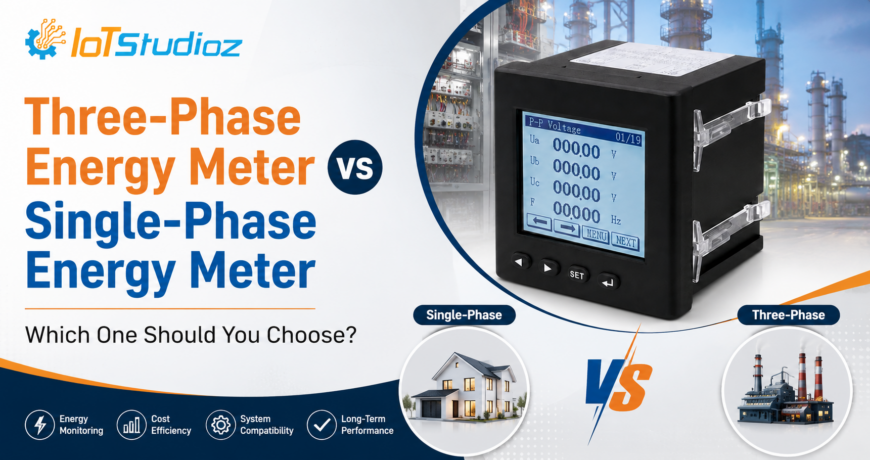
Three-Phase Energy Meter vs Single-Phase Energy Meter: Which One Should You Choose?
Choosing the right energy meter is essential for accurate power monitoring, energy management, and cost optimization. Whether you are installing an energy monitoring system for a home, office, commercial building, or industrial facility, selecting between a Single-Phase Energy Meter and a Three-Phase Energy Meter depends on your electrical infrastructure and monitoring requirements.
While both types of energy meters measure electricity consumption, they are designed for different power systems and applications. A single-phase energy meter is commonly used in residential buildings and small businesses, whereas a three-phase energy meter is ideal for industries, factories, large commercial complexes, and high-power equipment.
Modern Three-Phase Energy Meters with RS485 Modbus RTU communication go beyond simple energy measurement by providing real-time monitoring of voltage, current, power factor, frequency, active power, reactive power, and energy consumption. These devices can also communicate with PLCs, SCADA systems, Building Management Systems (BMS), and IoT platforms for centralized energy management.
What Is a Single-Phase Energy Meter?
A Single-Phase Energy Meter is designed to measure electrical energy consumption in single-phase AC power systems, which typically consist of:
- One Live (Phase) wire
- One Neutral wire
Single-phase electricity is commonly supplied to homes, apartments, small offices, retail shops, and other low-power applications.
The meter records electricity consumption in kilowatt-hours (kWh) and may also display voltage, current, frequency, and power depending on the model.
What Is a Three-Phase Energy Meter?
A Three-Phase Energy Meter measures electricity usage in three-phase electrical systems, which generally include:
- Phase A
- Phase B
- Phase C
- Neutral (optional)
These meters are built for high-load electrical systems and can measure multiple electrical parameters simultaneously.
Many modern three-phase meters also include:
- RS485 Communication
- Modbus RTU Protocol
- Data Logging
- Alarm Functions
- Remote Monitoring
- Energy Analytics
These features make them suitable for industrial automation and smart energy management.
Understanding Single-Phase and Three-Phase Power
Single-Phase Power
Single-phase systems supply electricity through one alternating current waveform.
Characteristics include:
- Suitable for low-power loads
- Easy installation
- Lower equipment cost
- Common in residential buildings
Typical applications include:
- Fans
- Lights
- TVs
- Refrigerators
- Small pumps
- Personal computers
Three-Phase Power
Three-phase systems use three AC waveforms that are 120 degrees apart.
Advantages include:
- Higher efficiency
- Continuous power delivery
- Better performance for heavy machinery
- Reduced transmission losses
- Ability to handle high electrical loads
Typical applications include:
- Industrial motors
- Compressors
- HVAC systems
- CNC machines
- Manufacturing equipment
- Water pumps
- Elevators
Key Differences Between Single-Phase and Three-Phase Energy Meters
| Feature | Single-Phase Energy Meter | Three-Phase Energy Meter |
| Power Supply | Single-phase | Three-phase |
| Number of Phases | 1 | 3 |
| Voltage Measurement | One phase | Three phases |
| Current Measurement | One phase | Three phases |
| Maximum Load Capacity | Low to moderate | High |
| Industrial Use | Limited | Excellent |
| Commercial Use | Small businesses | Large facilities |
| Residential Use | Ideal | Large residences or villas with three-phase supply |
| Power Monitoring | Basic | Advanced |
| RS485 Modbus RTU Support | Available in some models | Common in industrial models |
| Remote Monitoring | Limited | Extensive |
| PLC/SCADA Integration | Optional | Standard in industrial environments |
| Installation Cost | Lower | Higher |
| Energy Analytics | Basic | Comprehensive |
Working Principle of a Single-Phase Energy Meter
A single-phase energy meter continuously measures:
- Voltage
- Current
- Power
- Energy consumption
The meter calculates electricity usage over time and displays it in kWh.
Some smart models also support:
- Wi-Fi
- RS485
- Modbus
- Mobile applications
However, they are primarily designed for smaller electrical systems.
Working Principle of a Three-Phase Energy Meter
A three-phase energy meter performs the same basic function but monitors all three phases simultaneously.
It measures:
- Phase voltage
- Line voltage
- Current per phase
- Active power
- Reactive power
- Apparent power
- Frequency
- Power factor
- Energy consumption
Using RS485 Modbus RTU, the meter continuously sends this data to automation systems for real-time monitoring and analysis.
Advantages of a Single-Phase Energy Meter
- Affordable Solution: Lower purchase and installation costs make it suitable for homes and small businesses.
- Easy Installation: Simple wiring and maintenance reduce setup time.
- Compact Design: Requires less installation space.
- Suitable for Residential Applications: Ideal for everyday household electricity monitoring.
- Lower Maintenance: Fewer components simplify servicing.
Advantages of a Three-Phase Energy Meter
1. Comprehensive Energy Monitoring
Measures multiple electrical parameters across all three phases.
2. Supports Industrial Automation
Integrates with:
- PLCs
- SCADA
- BMS
- IoT gateways
3. Remote Monitoring
Real-time data can be accessed from centralized software platforms.
4. High Accuracy
Designed for precise monitoring of industrial electrical systems.
5. Improved Power Quality Analysis
Detects:
- Voltage imbalance
- Phase loss
- Overcurrent
- Under-voltage
- Frequency variations
- Poor power factor
6. Better Energy Management
Helps identify inefficient equipment and reduce electricity costs.
7. Scalable Communication
Using RS485 Modbus RTU, multiple meters can be connected on a single communication network.
Applications of Single-Phase Energy Meters
Single-phase energy meters are commonly used in:
- Residential homes
- Apartments
- Small offices
- Retail stores
- Restaurants
- Clinics
- Small workshops
- Schools
Applications of Three-Phase Energy Meters
Three-phase energy meters are widely used in:
- Manufacturing plants
- Industrial automation
- Smart factories
- Commercial buildings
- Shopping malls
- Hospitals
- Data centers
- Warehouses
- Solar power plants
- Water treatment facilities
- Oil & gas plants
- Power distribution panels
When Should You Choose a Single-Phase Energy Meter?
A single-phase meter is the right choice if:
- Your building has a single-phase electrical connection.
- Your electrical load is relatively low.
- You need basic energy consumption monitoring.
- You have limited installation space.
- Your budget is a key consideration.
- You do not require advanced industrial communication.
Examples include:
- Homes
- Small retail shops
- Home offices
- Apartments
When Should You Choose a Three-Phase Energy Meter?
A three-phase meter is recommended if:
- Your facility uses a three-phase electrical supply.
- You operate heavy machinery or industrial equipment.
- You require real-time monitoring.
- You want remote energy management.
- You plan to integrate with PLCs or SCADA systems.
- You need advanced power quality analysis.
- Your organization wants to reduce energy costs through detailed analytics.
Examples include:
- Factories
- Commercial complexes
- Data centers
- Hospitals
- Manufacturing plants
- Industrial automation systems
RS485 Modbus RTU: Why It Matters
One of the biggest advantages of modern three-phase energy meters is RS485 Modbus RTU communication.
It enables:
- Long-distance communication (up to 1200 meters)
- Reliable data transmission in noisy industrial environments
- Multi-device networking
- Easy integration with industrial control systems
- Centralized monitoring of multiple energy meters
- Reduced wiring costs
This makes RS485 Modbus RTU the preferred communication standard for industrial energy monitoring.
Factors to Consider Before Choosing
Before selecting an energy meter, evaluate the following:
- Electrical Supply Type: Determine whether your facility has a single-phase or three-phase power supply.
- Load Capacity: Estimate the total electrical load and future expansion plans.
- Communication Requirements: If remote monitoring or automation is needed, choose a meter with RS485 Modbus RTU.
- Accuracy: Select a meter with appropriate accuracy for your application.
- Integration: Ensure compatibility with existing PLC, SCADA, or BMS systems.
- Environmental Conditions: Choose an industrial-grade meter for harsh operating environments.
- Budget: Balance initial investment with long-term energy savings and operational benefits.
Future of Energy Monitoring
The latest generation of energy meters is evolving beyond basic metering. Modern devices now include:
- IoT connectivity
- Cloud-based dashboards
- Mobile monitoring apps
- AI-driven energy analytics
- Predictive maintenance
- Remote firmware updates
- Renewable energy monitoring
- Smart grid integration
- Advanced alarm and notification systems
These features help organizations make data-driven decisions and improve energy efficiency.
Conclusion
Both Single-Phase Energy Meters and Three-Phase Energy Meters play important roles in measuring electricity consumption, but the right choice depends on your electrical system and monitoring requirements.
A Single-Phase Energy Meter is ideal for homes, apartments, and small businesses where power demands are relatively low and basic energy monitoring is sufficient.
In contrast, a Three-Phase Energy Meter, particularly one equipped with RS485 Modbus RTU communication, is the preferred solution for commercial buildings, industrial facilities, and smart infrastructure. It offers advanced monitoring capabilities, seamless integration with automation systems, remote data collection, and detailed energy analytics that support efficient operations and cost reduction.
If your goal is to improve energy efficiency, monitor power quality, and integrate with modern industrial automation systems, investing in a Three-Phase Energy Meter with RS485 Modbus RTU is a future-ready choice that delivers long-term value and operational reliability.
FAQs
1. What is the main difference between a single-phase and a three-phase energy meter?
A single-phase energy meter is designed for single-phase electrical systems commonly found in homes and small businesses. A three-phase energy meter is used in three-phase power systems, making it suitable for commercial buildings, factories, and industrial applications that require higher power capacity and more detailed energy monitoring.
2. Can a three-phase energy meter be used in a residential building?
Yes, a three-phase energy meter can be used in residential buildings if the property has a three-phase electrical connection. Large homes, villas, apartment complexes, and residences with high-power equipment such as elevators, central air conditioning, or EV chargers often use three-phase energy meters.
3. Why is RS485 Modbus RTU important in a three-phase energy meter?
RS485 Modbus RTU enables reliable communication between the energy meter and devices such as PLCs, SCADA systems, Building Management Systems (BMS), and IoT gateways. It allows real-time data monitoring, remote access, long-distance communication, and centralized energy management in industrial environments.
4. Which industries commonly use three-phase energy meters?
Three-phase energy meters are widely used in industries such as manufacturing, power distribution, commercial buildings, hospitals, data centers, water treatment plants, oil & gas facilities, renewable energy systems, warehouses, and smart factories where accurate energy monitoring and power quality analysis are essential.
5. How do I choose the right energy meter for my application?
Start by identifying your electrical supply type. If your facility has a single-phase connection, a single-phase energy meter is the right choice. If it uses a three-phase power supply, especially for heavy machinery or industrial automation, choose a three-phase energy meter. Also consider factors such as communication requirements (RS485 Modbus RTU), measurement accuracy, load capacity, integration with PLC/SCADA systems, and future scalability.