
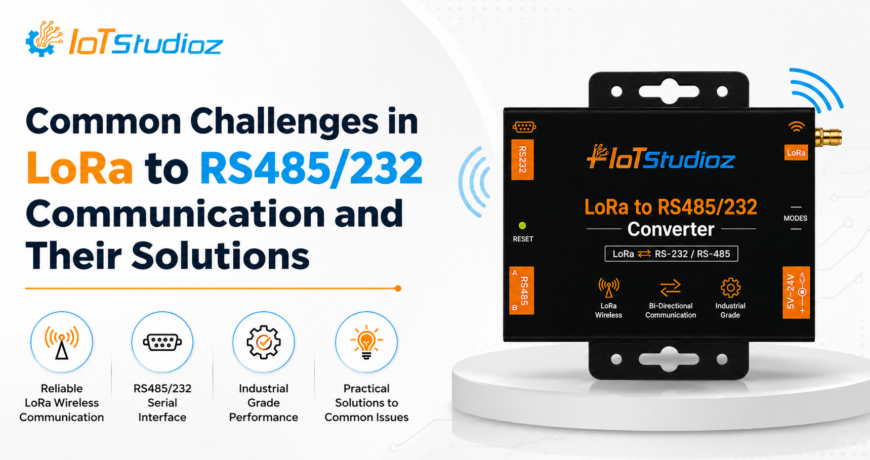
Common Challenges in LoRa to RS485/232 Communication and Their Solutions
Industrial automation is rapidly moving toward wireless communication, allowing organizations to monitor and control equipment over long distances without extensive cabling. One of the most effective ways to achieve this is by integrating LoRa technology with traditional RS485 and RS232 communication protocols.
A LoRa to RS485/232 Converter bridges the gap between long-range wireless communication and legacy serial devices. It enables PLCs, sensors, energy meters, RTUs, and industrial controllers to communicate wirelessly across factories, farms, utilities, and smart cities.
However, like any communication system, LoRa to RS485/232 integration comes with certain technical challenges. Understanding these issues and implementing the right solutions can significantly improve system reliability, data accuracy, and network performance.
Understanding LoRa to RS485/232 Communication
Before discussing the challenges, let’s briefly understand how the system works.
A LoRa to RS485/232 converter acts as an interface between:
- Serial devices (RS485 or RS232)
- LoRa wireless communication network
The converter receives serial data from industrial equipment and transmits it wirelessly using LoRa radio. At the receiving end, another converter converts the LoRa signal back into RS485 or RS232 data.
This approach eliminates long communication cables while maintaining reliable industrial communication over several kilometers.
Why Industries Use LoRa with RS485/RS232
Industries increasingly adopt LoRa because it offers several advantages:
- Long-distance communication
- Low power consumption
- Reduced wiring costs
- Easy installation
- Reliable data transmission
- Ideal for remote monitoring
- Supports Industrial IoT applications
Despite these advantages, implementation requires careful planning.
Common Challenges in LoRa to RS485/232 Communication
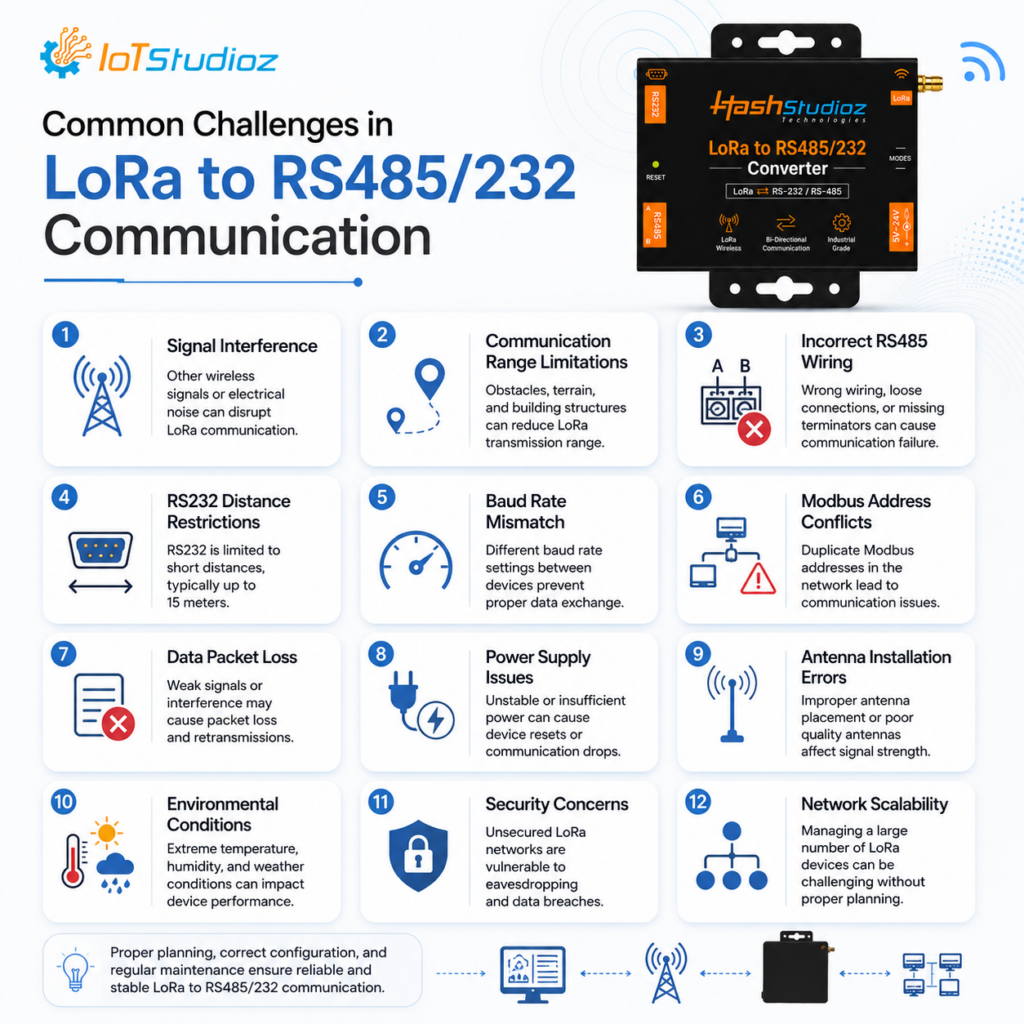
1. Signal Interference
The Challenge
LoRa operates in unlicensed frequency bands, where other wireless devices may also communicate.
Possible interference sources include:
- Wi-Fi routers
- Bluetooth devices
- Industrial wireless equipment
- Radio transmitters
- Nearby LoRa networks
Interference can reduce communication quality and increase packet loss.
Solution
To minimize interference:
- Choose an appropriate LoRa frequency.
- Use high-quality antennas.
- Install antennas away from electrical equipment.
- Increase antenna height where possible.
- Select optimal spreading factors.
- Perform a wireless site survey before deployment.
2. Communication Range Limitations
The Challenge
Although LoRa supports communication over several kilometers, actual range depends on:
- Buildings
- Metal structures
- Trees
- Hills
- Weather conditions
- Electromagnetic interference
Poor installation can significantly reduce communication distance.
Solution
Improve communication range by:
- Installing antennas in elevated positions
- Using high-gain antennas
- Maintaining line-of-sight whenever possible
- Reducing obstacles between devices
- Using repeaters if necessary
- Optimizing transmission power
3. Incorrect RS485 Wiring
The Challenge
RS485 communication depends on proper wiring.
Common mistakes include:
- Reversed A/B lines
- Missing termination resistors
- Poor grounding
- Long cable stubs
- Loose terminal connections
These mistakes often lead to unstable communication.
Solution
Always:
- Verify A and B wiring
- Use twisted-pair shielded cables
- Install 120-ohm termination resistors where required
- Follow proper grounding practices
- Keep cable lengths within recommended limits
4. RS232 Distance Restrictions
The Challenge
Unlike RS485, RS232 was designed for short-distance communication.
Typical limitations include:
- Short cable lengths
- Point-to-point communication only
- Increased signal degradation over longer distances
Solution
For longer communication:
- Convert RS232 to RS485 before wireless transmission.
- Keep RS232 cable lengths short.
- Use industrial-grade converters.
- Position converters close to RS232 devices.
5. Baud Rate Mismatch
The Challenge
Communication fails if the baud rate settings differ between devices.
Common mismatches include:
- Baud rate
- Data bits
- Stop bits
- Parity settings
Solution
Verify that every connected device uses identical serial communication settings.
Always confirm:
- Baud rate
- Parity
- Stop bits
- Data bits
- Device address (for Modbus)
6. Modbus Address Conflicts
The Challenge
Many industrial devices communicate using Modbus RTU over RS485.
If two devices share the same Modbus address, communication errors occur.
Solution
Assign unique Modbus slave IDs to every connected device.
Maintain a documented address list for all field equipment.
7. Data Packet Loss
The Challenge
Occasionally transmitted packets never reach the destination due to:
- Weak signal
- Interference
- Incorrect radio settings
- Network congestion
Packet loss reduces monitoring accuracy.
Solution
Improve reliability by:
- Using acknowledgment (ACK) mechanisms
- Optimizing payload size
- Selecting suitable transmission intervals
- Improving antenna placement
- Increasing signal quality
8. Power Supply Issues
The Challenge
Unstable power causes communication interruptions.
Voltage fluctuations may:
- Restart converters
- Corrupt transmitted data
- Damage communication modules
Solution
Use:
- Industrial power supplies
- Surge protection
- Voltage stabilizers
- UPS backup systems
- Proper grounding
9. Antenna Installation Errors
The Challenge
A poorly installed antenna significantly affects communication.
Typical mistakes include:
- Wrong antenna orientation
- Indoor placement
- Metal obstructions
- Damaged antenna cables
Solution
Install antennas:
- Vertically
- Above nearby obstacles
- Away from metal enclosures
- Using quality RF cables
- With waterproof connectors for outdoor use
10. Environmental Conditions
The Challenge
Industrial environments expose equipment to:
- Dust
- Heat
- Moisture
- Rain
- Vibration
- Corrosive chemicals
These factors reduce hardware lifespan.
Solution
Choose industrial-grade converters featuring:
- IP65/IP67 enclosures (where needed)
- Wide operating temperature range
- Industrial EMC protection
- Vibration resistance
- Surge protection
11. Security Concerns
The Challenge
Wireless communication introduces cybersecurity risks.
Potential threats include:
- Unauthorized access
- Data interception
- Device spoofing
Solution
Implement:
- AES encryption
- Secure authentication
- Device whitelisting
- Strong passwords
- Regular firmware updates
- Secure network architecture
12. Network Scalability
The Challenge
As more devices are added, communication efficiency may decrease due to increased traffic and collisions.
Solution
Plan for scalability by:
- Dividing devices into logical groups
- Optimizing transmission intervals
- Selecting appropriate LoRa parameters
- Monitoring network performance regularly
Best Practices for Reliable LoRa to RS485/232 Communication
For the best performance:
- Use industrial-grade LoRa converters.
- Perform a site survey before installation.
- Configure identical serial communication settings.
- Use proper RS485 wiring practices.
- Install high-quality antennas.
- Protect equipment from environmental conditions.
- Update firmware regularly.
- Monitor signal quality.
- Maintain proper documentation.
- Test the network before full deployment.
Applications of LoRa to RS485/232 Communication
LoRa to RS485/232 converters are widely used across industries, including:
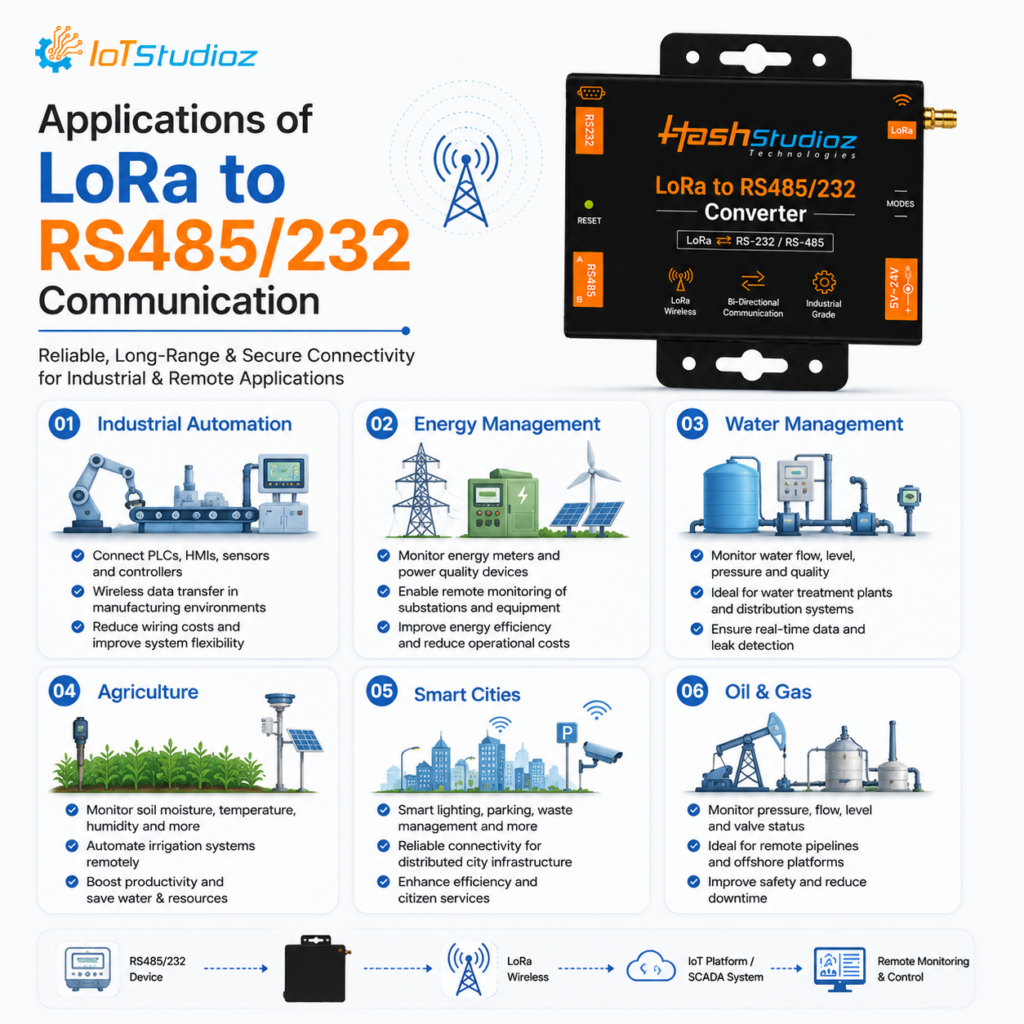
Industrial Automation
- PLC communication
- Production monitoring
- Remote machine diagnostics
Energy Management
- Smart energy meters
- Power monitoring systems
- Solar power plants
Water Management
- Pump monitoring
- Water level sensors
- Treatment plants
Agriculture
- Irrigation systems
- Soil monitoring
- Weather stations
Smart Cities
- Street lighting
- Environmental monitoring
- Traffic management
Oil & Gas
- Pipeline monitoring
- Remote RTUs
- Tank level monitoring
Benefits of Solving Communication Challenges
Addressing these common issues delivers several advantages:
- Higher communication reliability
- Reduced downtime
- Improved data accuracy
- Lower maintenance costs
- Better network scalability
- Enhanced equipment lifespan
- Increased operational efficiency
- Reliable long-distance connectivity
How to Choose the Right LoRa to RS485/232 Converter
When selecting a converter, consider:
- Communication range
- Supported frequency bands
- RS485 and RS232 compatibility
- Modbus RTU support
- Transmission power
- Industrial protection rating
- Operating temperature
- Power supply options
- Security features
- Ease of configuration
- Manufacturer support and warranty
Choosing a converter with these capabilities helps ensure dependable performance in demanding industrial environments.
Conclusion
LoRa to RS485/232 communication is transforming industrial connectivity by enabling reliable, long-range wireless communication for legacy serial devices. While challenges such as signal interference, wiring errors, baud rate mismatches, packet loss, and environmental factors can affect performance, they can be effectively managed with proper planning, installation, and maintenance.
By following best practices, selecting industrial-grade hardware, and optimizing network configuration, businesses can build robust and scalable Industrial IoT systems that reduce wiring costs, simplify remote monitoring, and improve operational efficiency.
Whether you’re deploying a smart factory, monitoring utility infrastructure, or modernizing legacy equipment, understanding these common challenges – and their solutions – is the key to achieving reliable and efficient LoRa to RS485/232 communication.
FAQs
1. What is a LoRa to RS485/232 converter?
A LoRa to RS485/232 converter is a device that enables wireless communication between LoRa networks and RS485 or RS232 serial devices, allowing long-range data transmission without extensive cabling.
2. Why is RS485 preferred over RS232 in industrial environments?
RS485 supports longer communication distances, multi-device networking, and better noise immunity, making it ideal for industrial automation.
3. What causes packet loss in LoRa communication?
Packet loss can result from weak signal strength, radio interference, incorrect network configuration, poor antenna placement, or network congestion.
4. How can I improve the communication range of a LoRa network?
Use high-gain antennas, install them at elevated locations, reduce physical obstructions, optimize transmission settings, and perform a site survey before deployment.
5. Can LoRa to RS485/232 converters work with Modbus RTU devices?
Yes. Most industrial LoRa to RS485 converters support Modbus RTU, enabling seamless wireless communication with PLCs, energy meters, RTUs, sensors, and other Modbus-compatible devices.